When my wife first asked if I wanted to visit Morocco, I wasn’t exactly an expert on the country. In fact, I barely knew where it was located. I wasn’t sure why she was so eager to visit North Africa, but after years of traveling together, I’ve learned that sometimes it is better to listen to her.
I agreed to ten days in the country. We left Morocco 90 days later.
Morocco turned out to be one of those places that got better the longer we stayed. Our family of five traveled from large cities to tiny villages, crossed the Atlas Mountains, explored the Atlantic coast, wandered through crowded medinas, and eventually rode camels into the massive dunes of the Sahara. By the time our 90 days were running out, none of us were particularly eager to leave.
So, is Morocco worth visiting? After spending three months exploring the country with my family, my answer is an easy yes. But Morocco isn’t necessarily an effortless destination. It can be chaotic, unfamiliar, and occasionally confusing. It’s also beautiful, affordable, welcoming, and unlike anywhere else we have traveled.
Here are some of the things I learned along the way.

Morocco Was Friendlier Than I Expected
I was a little apprehensive when we first arrived because I had no idea what to expect. Before the trip, I had heard plenty of warnings about crime, angry locals, and the difficulties of traveling in a predominantly Muslim country. Apparently, the airport security staff hadn’t gotten the memo that they were supposed to be angry. Instead, they were friendly and welcoming.
That first interaction ended up being a pretty good introduction to our next three months. If I had to choose one word to describe our experience with the people of Morocco, it would be welcome. As our family traveled from big cities into smaller towns and villages, those interactions became even more noticeable. People smiled and waved. Strangers said hello. Shopkeepers talked with us. Tea appeared with remarkable regularity.
The longer we stayed, the more comfortable we became. Morocco is a diverse country, and during our visit I talked with people from different backgrounds and with different views about religion, politics and the world. Most of those conversations eventually came around to many of the same things people talk about everywhere else: work, school, children and family.
We certainly encountered persistent salespeople and the occasional person hoping to make some money from the tourists, but that never defined Morocco for us. The overwhelming majority of our personal interactions were positive.
The Cities Are Only Part of Morocco
Most international visitors will enter Morocco through one of its major cities, and cities such as Marrakesh, Casablanca, Rabat and Fez are understandably a major part of Moroccan tourism. Don’t assume they are the whole country. Some of our favorite experiences happened after we left the major tourist areas.
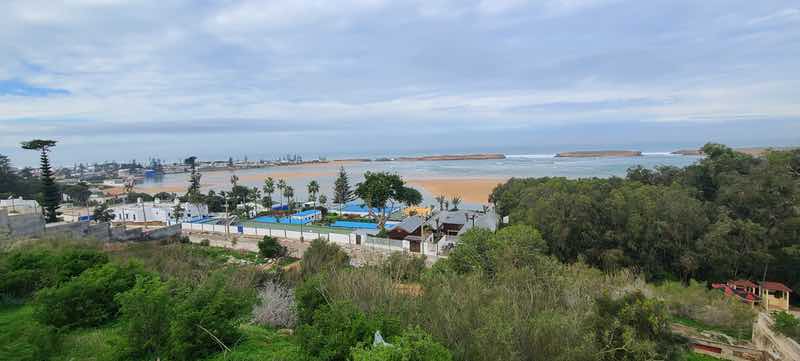
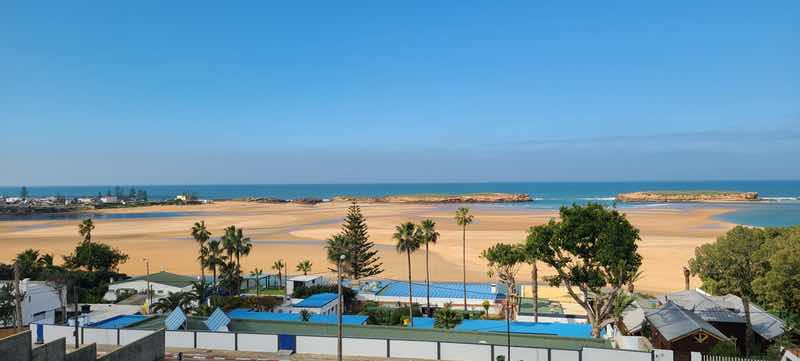
We visited small towns, ancient ruins, and beaches where we sometimes had large stretches of sand almost entirely to ourselves. Markets in smaller communities also seemed to make our money stretch further than those in the heavily visited tourist areas. More importantly, getting away from the largest cities gave us a chance to see another side of Moroccan life.
There is something fun about wandering into a little bakery that doesn’t appear on Google Maps, trying to communicate with the person behind the counter and walking away with fresh bread that costs almost nothing. The same was true of local markets. We were no longer just looking at souvenirs aimed at tourists. We were shopping alongside people buying the things they actually needed for everyday life.
If you have enough time in Morocco, leave some empty space in the itinerary. The famous destinations are famous for a reason, but some of the best experiences can happen between them.
Crossing the Atlas Mountains
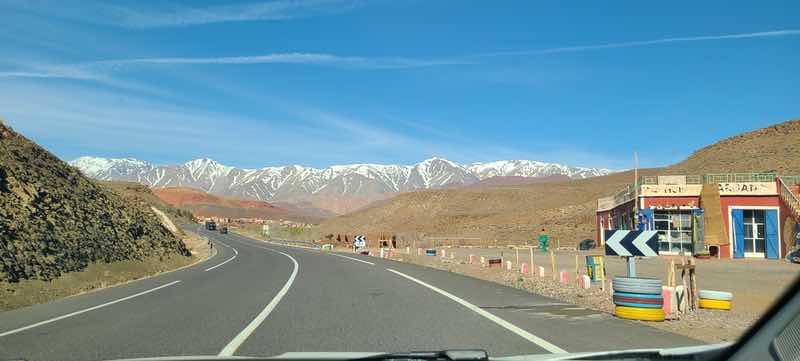
Seeing the snow on top of the beautiful Atlas Mountains is pretty, but also a little disconcerting when you’re about to cross them. We visited during the winter, so I worried about snow closing the road. Since I was doing the driving myself, I spent considerably more time thinking about road conditions than the rest of my family did. As it turned out, most of my worrying was unnecessary.
The route we took was modern, the signage was good, and the steep sections had guardrails. Morocco also surprised me with how connected it was. Our mobile phone service worked remarkably well during most of our travels, including many areas where I expected to have trouble getting a signal.
Once we started climbing into the mountains, my concern about the drive gradually gave way to enjoying it. At the top, we stopped at a viewpoint where a small business owner had parked a coffee van. I bought a strong espresso and stood there looking across the Atlas Mountains. Snow-covered peaks stretched across the horizon while I drank coffee from a roadside van in North Africa.
Sometimes travel doesn’t need to be more complicated than that.
If your Morocco itinerary takes you between the coast or major northern cities and the desert regions to the southeast, don’t think of crossing the Atlas Mountains simply as transportation between destinations. The drive is part of the experience.
Why the Sahara Is Worth the Journey
Our family has traveled extensively around the United States, and we’ve visited plenty of sand dunes. So when my wife insisted that we needed to see the Sahara, I wondered how different another field of sand could really be.
Quite different, apparently.
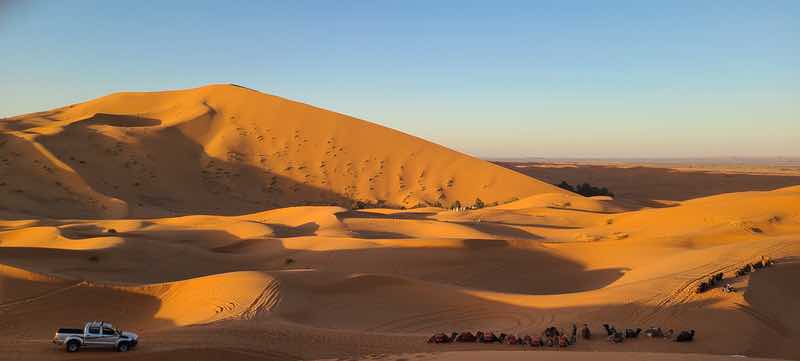
We drove for hours through increasingly dry country toward the Sahara. After spending most of the day surrounded by desert scenery, I started wondering whether we would even know when we had reached the famous dunes. Then we rounded a bend, and there was absolutely no question.
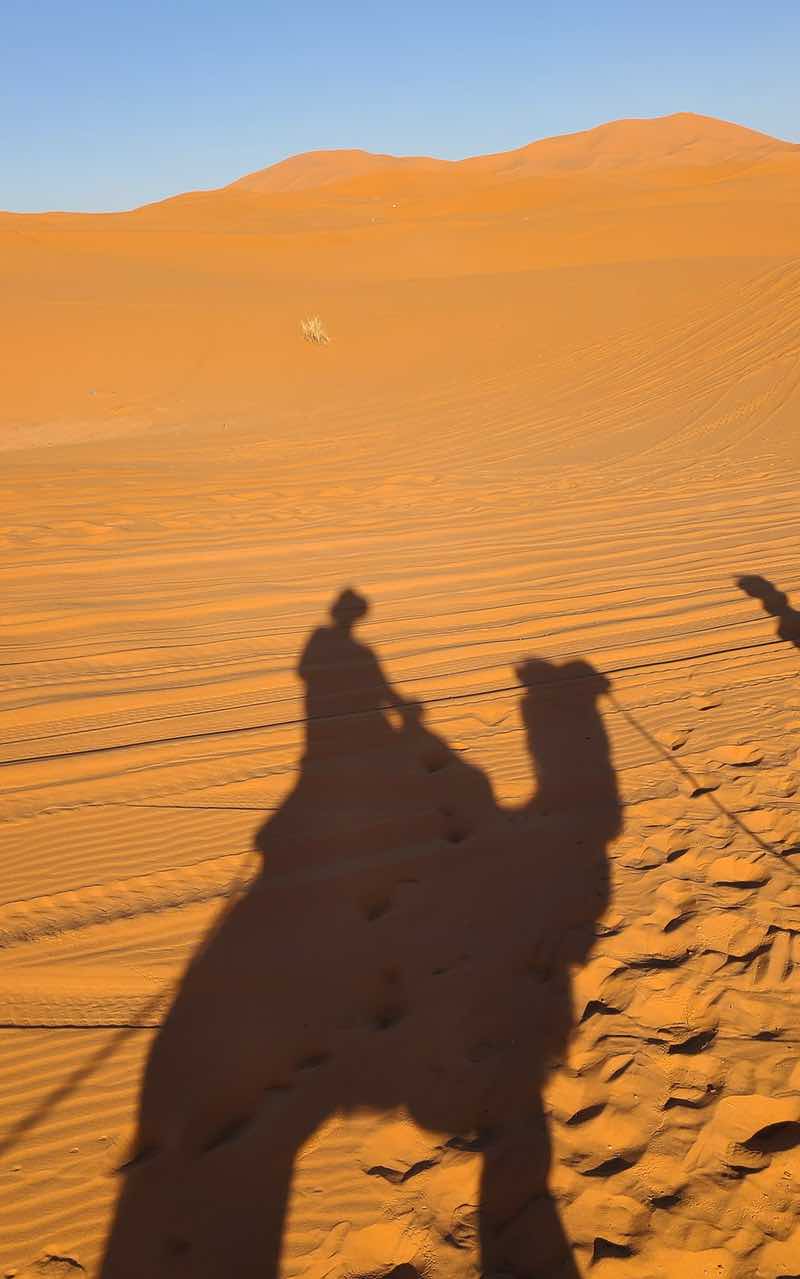
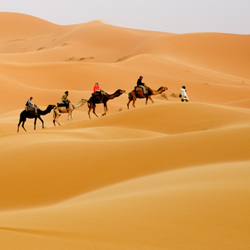
The enormous dune field appeared in the distance, rising out of the flatter landscape like mountains. Everything we’d driven through suddenly looked like the approach to the Sahara rather than the Sahara itself. Getting onto a camel and riding into those dunes is one of those travel experiences our family will probably talk about for the rest of our lives.
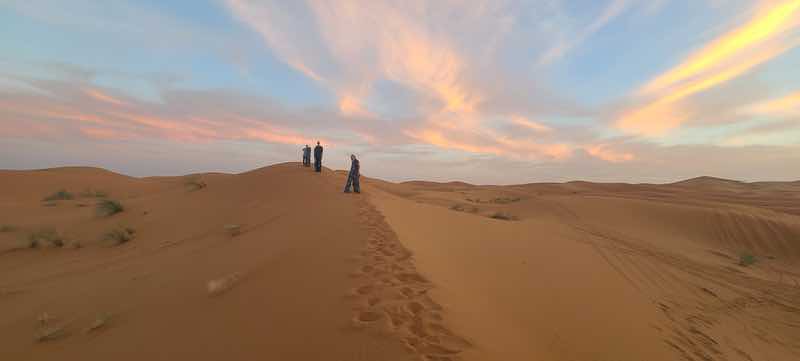
I’ve seen large dunes before, but the scale of the Sahara is difficult to understand until you are standing in it. Climb high enough, and the landscape becomes an ocean of sand. Giant dunes rise and fall into the distance until the individual ridges begin blending together.
Then the sun starts dropping. The sand changes color, shadows stretch across the dunes, and the whole landscape turns golden. It was spectacular, and it took my breath away.
The desert also provided one of the most interesting contrasts of our trip. The physical environment is harsh, but the people we met there were some of the warmest and most good-natured people we encountered anywhere in the world.
Getting to the Sahara takes time, which is probably one reason the experience remains so special. Travelers who don’t want to arrange transportation, accommodations, desert camps, and guides separately can consider Tailor-made Morocco tours that combine several parts of the country into one itinerary.
However you arrange it, I would not rush the Sahara. It takes effort to get there. Give yourself enough time to enjoy being there once you arrive.
- Get a Car Rental
- Get an eSim to be able to use your smartphone abroad.
- Get a universal plug adapter
- Buy Travel Insurance

What Traveling Morocco With a Family Is Really Like
Having our children with us when we travel is non-negotiable, so our entire Morocco experience was as a family of five. With three growing kids in the family, one of the first things I noticed was the restaurant bill. Somehow, feeding all five of us in Morocco regularly cost much less than I expected, and portions were often large enough that nobody walked away hungry.
We normally don’t eat at restaurants constantly while traveling, but the relatively affordable food meant we ate out much more frequently in Morocco. That made food part of the experience rather than an occasional splurge.
We also took our children almost everywhere with us. We explored cities, markets, medinas, museums, stores, beaches and small communities. During three months of traveling, we never personally encountered a situation where we felt that our family was in immediate danger.
That doesn’t mean travelers should abandon normal precautions. Crowded markets require the same awareness you would use in any unfamiliar city, and parents should prepare children for an environment that may look and feel very different from home. But based on our experience, I would have no hesitation about returning to Morocco with children. In fact, our kids are part of the reason we want to go back.
Moroccan Food Beyond the First Tagine
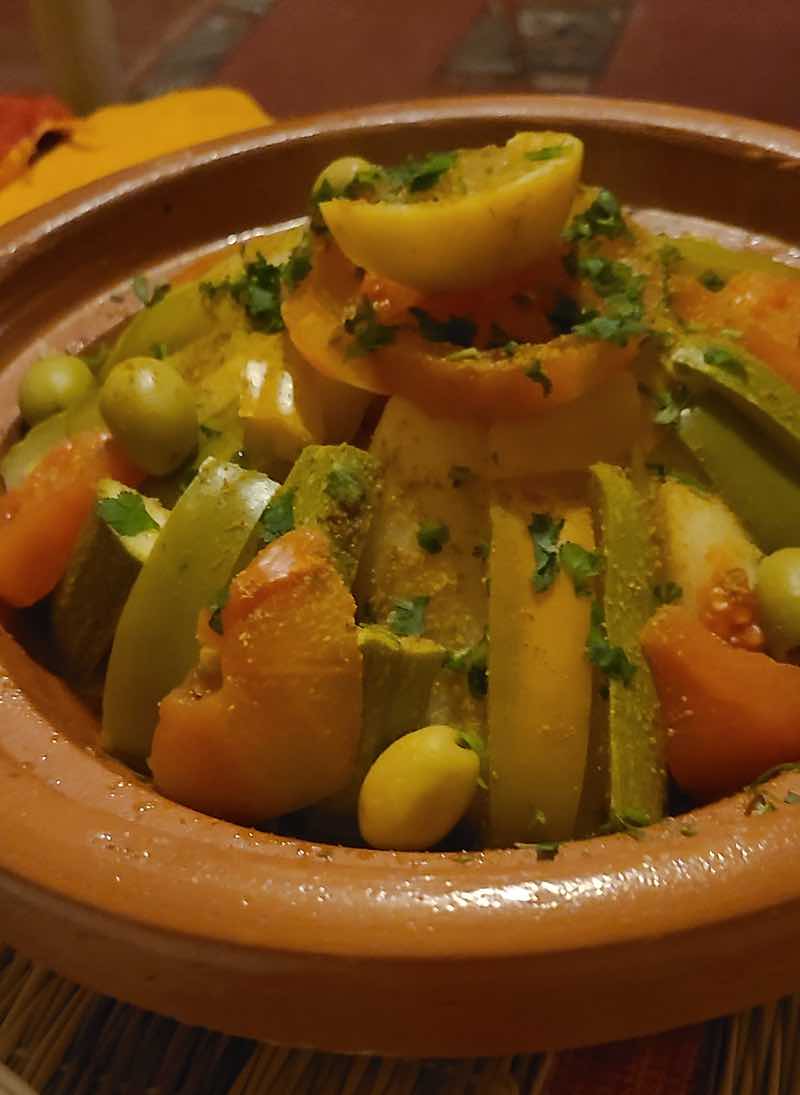
Before visiting Morocco, I had never heard of tagine (sometimes spelled tajine). Now we make it at home about once a week.
A tagine is both the traditional clay cooking vessel and the slow-cooked dish prepared inside it. Meat and vegetables cook together slowly, and the ingredients and seasonings vary depending on where you are and what is available. That variation is part of what makes it so good. Travel around Morocco long enough and you’ll discover that there isn’t just one tagine to try.
Because it takes time to cook, smaller restaurants may need advance notice to prepare one. Other places, including some street vendors and busy restaurants, may already have several cooking when you arrive. But Moroccan food goes well beyond tagine.
Our first meal in the country was actually Italian. After traveling all day, we were tired and hungry. Italian food was nearby and familiar, so we figured it would do. I wasn’t expecting much since the place was also located in the mall food court.
The chicken Parmesan was as good as some I’ve eaten in Italy. That became another theme of the trip. We found good food in places where we weren’t necessarily expecting it. Medinas were particularly enjoyable places to stop for pastries and coffee halfway through a long shopping excursion.

For bread, though, I preferred the smaller places. The little bakeries can be difficult to find because some aren’t marked online. If you see locals walking away from somewhere carrying fresh bread, that is generally a pretty good clue. At one small bakery, I paid the equivalent of less than twenty U.S. cents per loaf for some of the best handmade, brick-oven bread I’ve ever eaten.
It is difficult to complain about that.
Getting Around Morocco
We rented a van, and I drove our family for much of the trip. Driving in Morocco is moderately difficult, but I wouldn’t describe it as impossible for an experienced driver. Road signs commonly use Arabic and French. I don’t read either language, yet with navigation on a phone and a little patience, I was able to get us around the country.
The bigger adjustment was learning the rhythm of Moroccan roads. Roundabouts are everywhere. Traffic signals seemed less common than I was accustomed to in the United States, and the variety of things sharing the road takes some adjustment.
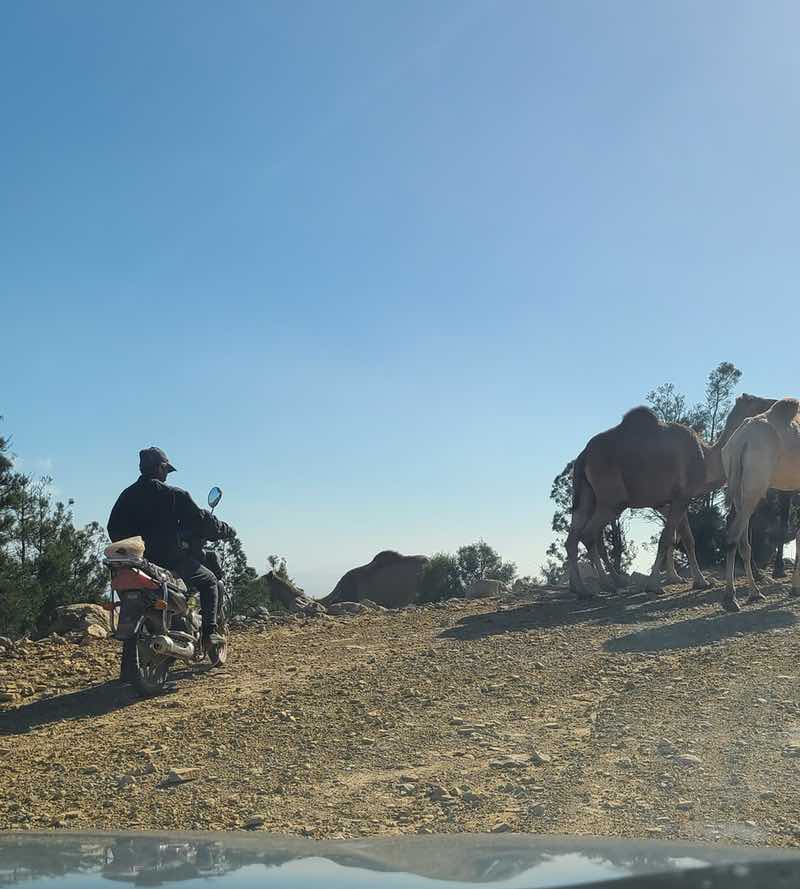
During our travels, I encountered cars, vans, bicycles, scooters, donkeys, carts, pedestrians, and occasionally camels. Sometimes all I really wanted was for everyone to pick a transportation century and stick with it.
Eventually, though, I became comfortable with the system. I even came home wishing we used roundabouts more often in the United States.
Travelers who don’t want to drive have plenty of other options. Taxis were common almost everywhere we went, including larger vehicles that can accommodate groups. For a family, hiring local transportation can also eliminate the stress of navigating unfamiliar cities and allow everyone to enjoy the scenery.
What Surprised Me About the Moroccan People
Before the trip, I mistakenly associated Morocco’s more conservative dress and social customs with a more serious culture. I was wrong. Moroccans we met were hilarious.
People laughed constantly. Strangers joked with us. Conversations stretched much longer than expected. Tea showed up, and then more tea showed up. There seemed to be a wonderful ability to slow down and enjoy the people around you.
Some of my favorite memories of Morocco aren’t attached to famous attractions at all. They’re memories of sitting somewhere talking with people whose lives were very different from mine and discovering that we still had plenty to laugh about. Those interactions changed my impression of Morocco more than any monument could have.
The Parts of Morocco Travel That Aren’t Always Easy
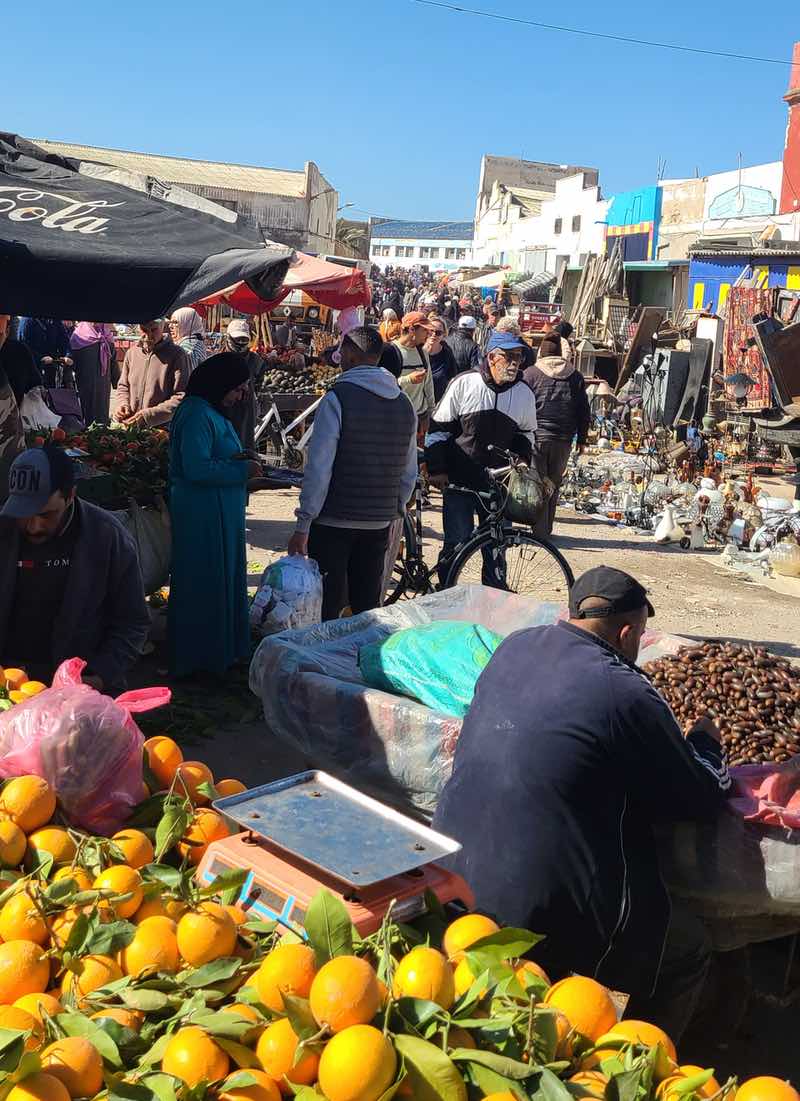
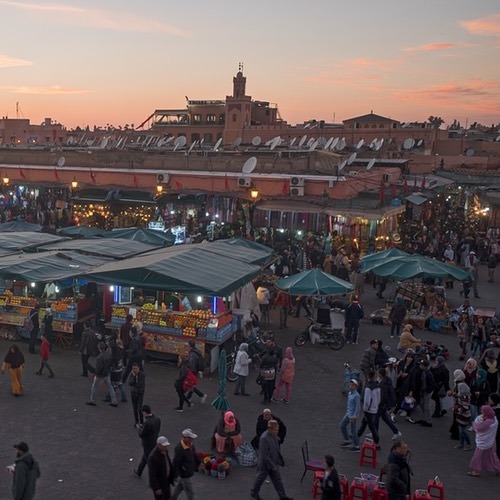
Morocco isn’t perfect, and travelers expecting it to operate like Western Europe or the United States may experience some culture shock. A crowded souk can be chaotic. Hundreds of people may be shopping at once. Vendors call out, and sometimes recorded sales calls blast from speakers. Scooters squeeze through spaces where you wouldn’t expect a scooter to fit.
Products, food, and livestock may all be much closer together than a first-time visitor expects. Traditional butcher stalls can also surprise visitors accustomed to buying neatly packaged meat from a supermarket. I don’t necessarily consider those things negatives. Part of international travel is discovering that your normal isn’t everybody else’s normal.
There were things that bothered us, though. Litter was noticeable in some parts of the country, particularly outside the major tourist attractions. Seeing plastic and other trash scattered across otherwise beautiful landscapes was frustrating.
Infrastructure and cleanliness also vary considerably depending on where you travel, so visitors shouldn’t expect every stop to have the amenities they might be accustomed to at home. Interestingly, the Sahara dunes we visited were remarkably clean.
For me, those imperfections don’t outweigh the reasons to visit Morocco. They are simply part of traveling through a country that is culturally and economically different from home. Go expecting Morocco to be Morocco rather than expecting it to imitate somewhere else.
How Long Should You Spend in Morocco?
I originally planned to spend ten days in Morocco. That still makes me laugh. We ended up staying until the final day of our 90-day stay.
Obviously, most travelers don’t have three months available, and you don’t need anywhere near that long to have a worthwhile trip. For a first visit, I think around ten days is enough to experience several different sides of Morocco without turning every day into a race to the next destination.
The important thing is to be realistic about distances. Morocco is a substantial country, and trying to combine too many cities, the Atlas Mountains, the coast and the Sahara can result in spending much of the trip in transit.
If the Sahara is important to you, budget extra time for it. It takes a while to reach the major dune areas from many of Morocco’s most popular cities, and after making that journey, spending only a few hours there would be a shame.
If you have two weeks, even better. And if you accidentally stay three months, I understand.
When Should You Visit Morocco?
The best time to visit depends heavily on where you are going. Morocco contains an Atlantic coastline, mountains, cities, and desert, and those areas can experience very different weather. The Sahara can become extremely hot during summer, while snow can affect travel through the Atlas Mountains during winter.
Our extended visit allowed us to experience changing conditions in different parts of the country. Winter along the coast could be quite pleasant, particularly compared with colder parts of the United States. Later in our trip, conditions in the Sahara were comfortable enough during the day for activities such as sandboarding.
Travelers should also check the religious calendar when planning a trip. Our stay was long enough that Ramadan began while we were in Morocco. Business hours and daily routines changed, something I hadn’t really considered when planning the trip.
It didn’t ruin the experience. Far from it. But knowing about major holidays and observances before arriving will make it easier to understand changes in restaurant hours, shopping, and everyday schedules.
What I’d Do Differently
On our trip, I handled almost all the planning and driving. We rented a van and traveled from Rabat down the Atlantic coast toward Agadir before eventually heading east toward the Sahara. I’m glad we did it, but I wouldn’t necessarily do it the same way again.
Next time, I would seriously consider using local drivers and taxi vans for more of the trip. They know the roads, understand the traffic, and know where things are. Transportation was also affordable enough during our visit that hiring drivers occasionally wouldn’t have destroyed our travel budget.
More importantly, I could look out the window. There were plenty of times when my family was admiring some incredible Moroccan landscape while I was staring intently at the road ahead, trying not to hit a scooter, pedestrian, or donkey.
Driving yourself provides tremendous freedom. So does letting somebody else drive. After three months in Morocco, I’ve learned to appreciate both.
So, Is Morocco Worth Visiting?
Absolutely. Our family has traveled extensively across the United States and internationally, yet Morocco is still one of the places everyone regularly talks about returning to.
Part of that is the scenery. You can cross snow-covered mountains, walk along Atlantic beaches, explore centuries-old medinas, and ride a camel through enormous Saharan dunes during the same trip.
Part of it is affordability. Our money generally stretched much further than it does while traveling in the United States, which allowed us to eat out more often and try experiences we might otherwise have skipped.
But mostly, I remember the people: being welcomed by them, the laughter we shared, the tea they made appear, and the time they took to enjoy it with us. I remember arriving in a country I knew almost nothing about and leaving three months later wondering when we’d be able to return.
Morocco can be chaotic. It can be unfamiliar. It can occasionally test your patience or overload your senses. That’s also part of why you should go. Travel isn’t particularly transformative when everything looks, feels, and operates exactly like it does at home.
Morocco gave our family something different. From riding camels and driving quads across the Sahara to exploring ancient cities and watching the waves roll into Essaouira, there always seemed to be something else waiting around the next corner.
I went to Morocco because my wife wanted to see it. Next time, she won’t have to convince me.
 Intrepid Travel Morocco – Review: South Morocco Discovery
 What to See in Fes, Marrakech, Meknes and Rabat – the Four Imperial Cities of Morocco
 Travel to Morocco – Episode 397
 15 Days from Marrakech to the Sahara & Beyond – Morocco