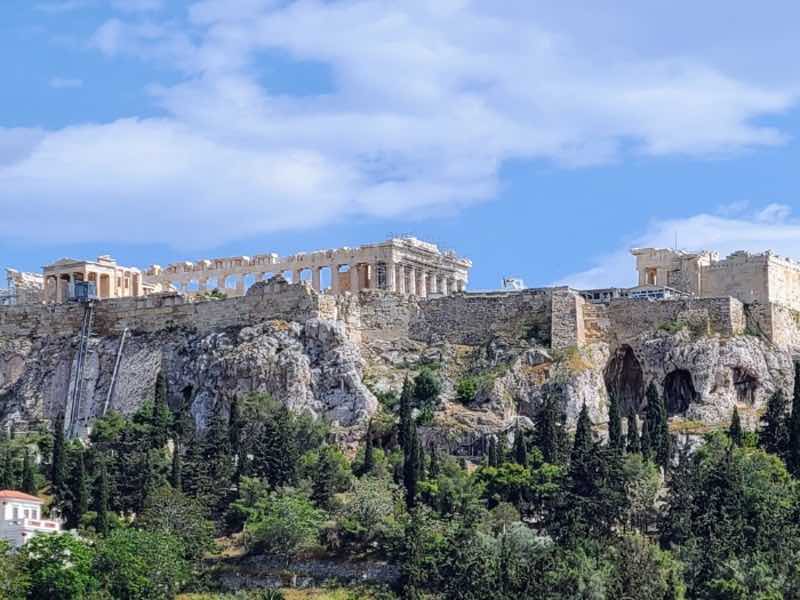
The Acropolis – Athens, Greece – Photo Credit M. Ibbott
The Peloponnese Peninsula often gets overlooked in favor of Greece’s islands, which is a shame. It is the large southern peninsula connected to the mainland by the Corinth Canal, and it offers a compact mix of ancient sanctuaries, Byzantine ruins, Venetian castles, coastal towns, and modern roads that make it well suited to a road trip. If you want to see a different side of Greece, this is a place that rewards slow travel and scenic routes.
This itinerary follows three base cities: Athens, Olympia, and Kalamata. The appeal is not just the destinations themselves, but the way the road between them becomes part of the lived experience.
Table of contents: ()
- Greece Beyond the Islands
- Why a Road Trip is Ideal
- Athens Day Trips: Corinth Canal, Epidaurus, and Nafplio
- Olympia: Ancient History in the Open Air
- Olympia day trip: Chlemoutsi and Kyparissia
- Kalamata Day Trips: Olive Groves, Castles, and Monasteries
- Koroni Castle and St. Eleistria Church
- The Mysteries of Mystras
- Why the Peloponnese Works for a Road Trip
Why a Road Trip is Ideal
We took a road trip in Greece because that made it possible to move at our own pace, stop when something caught our eye, and see places that would have been much harder to combine any other way. Public transportation and group tours are available, but driving gives you the freedom to pause in small towns, follow a scenic detour, or spend more time by the sea.
The main highways from Athens into the Peloponnese Peninsula are modern and straightforward, and the tolls are a small price to pay for convenience. The steeper mountain roads are well maintained, but there are plenty of switchbacks, making a journey more time-consuming. That said, they are more inclined to stop at lookouts or small towns perched on hillsides.
You can pick up your car rental after touring Athens, pick it up at the airport, or rent locally for just the days you need it. Renting locally provides flexibility and budget-friendly options. Since we were attending a conference, this was a great option for us. While I was in sessions, my husband was able to take a few side trips.
Athens Day Trips: Corinth Canal, Epidaurus, and Nafplio
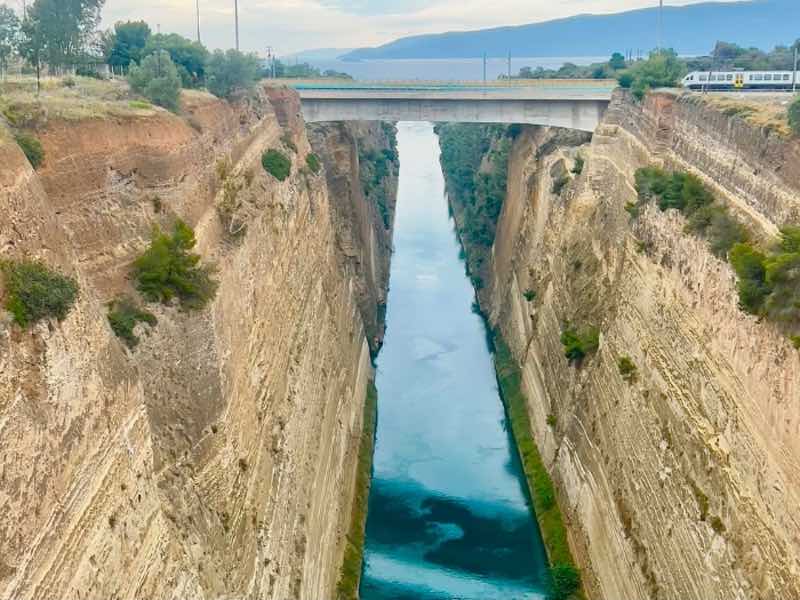
Corinth Canal, Greece – Peloponnese Peninsula – Photo Credit: J. Johnston
The Corinth Canal is one of the most striking landmarks on the approach to the Peloponnesian Peninsula, marking the narrow link between central Greece and the peninsula (and islands) beyond.
Best seen from the bridge or one of the roadside viewpoints, where you can peer straight down into the narrow trench carved through the Isthmus of Corinth. More than a scenic stop, it marks the physical gateway into the Peloponnese and a remarkable feat of engineering that has connected the Gulf of Corinth with the Saronic Gulf.
The Ancient Corinth Archaeological Site and Museum are about 4 km from the canal and are pretty spectacular. You will be able to see them with plenty of time to go to Epidaurus and Nafplio.
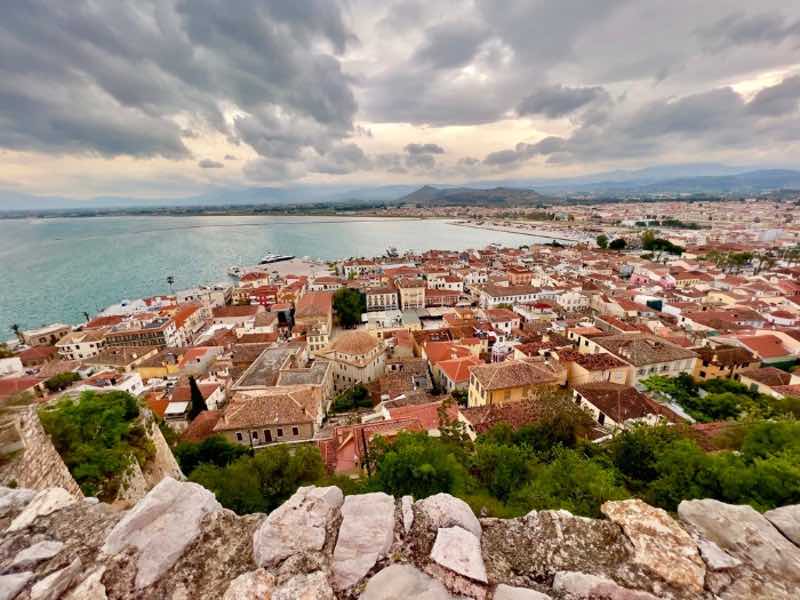
Napflio, Greece – Peloponnese Peninsula – Photo Credit: J. Johnston
Nafplio is worth the drive because it gives you a completely different side of the Peloponnese: elegant, walkable, and full of charm. Start in the old town, where narrow streets, neoclassical buildings, small squares, and waterfront cafes create an easy place to linger before heading uphill or exploring the harbor. The most memorable views come from the seafront promenade and the historic center.
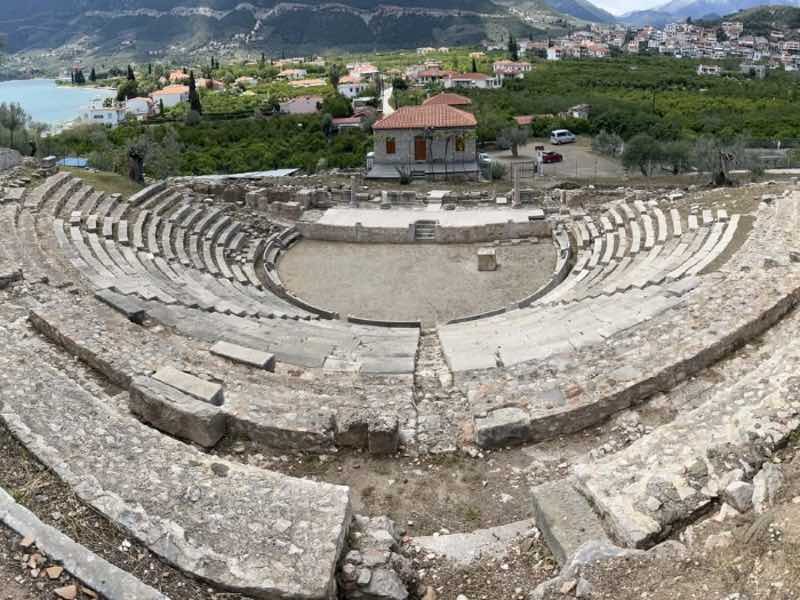
Epidaurus, Greece – Peloponnese Peninsula – Photo Credit: J. Johnston
Continuing on to Epidaurus, stop at the archaeological site and walk among the remains of the sanctuary of Asclepius, where the ancient amphitheater is what most visitors remember. The best-known feature is the ancient theatre itself, set in a peaceful landscape and celebrated for its symmetry and acoustics.
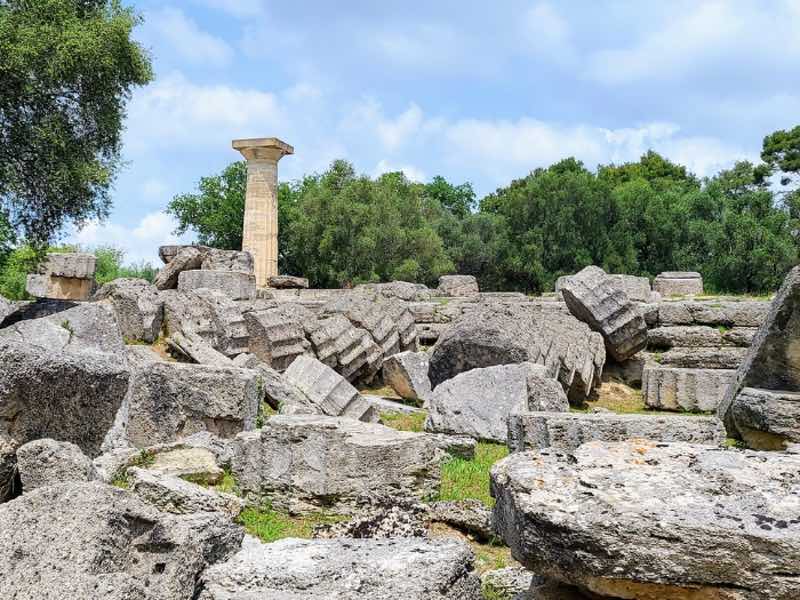
Olympia, Greece – Peloponnese Peninsula – Photo Credit: M. Ibbott
Olympia: Ancient History in the Open Air
Ancient Olympia deserves time and an overnight stay for the second round of day trips. It is known as the birthplace of the Olympic Games; it includes the remains of the Temple of Zeus, the palaestra, where the athletes trained, and finally the ancient stadium itself, where the Games were held on a four-year cycle. As we walked around, we were in awe at the magnitude of this site. Nothing has been reconstructed; the massive columns lay as they fell centuries ago.

Warrior Helmets – Olympia Museum – Photo Credit: M. Ibbott
An official Greek tour guide will help with the history of the Games. The events were open only to free Greek men, which gives Olympia its particular place in history as both a religious sanctuary and athletic center. Women were not allowed to compete or attend, apart from the priestess of Demeter Chamyne, who had her own place at the stadium.

Grecotel Olympia Oasis Resort – Peloponnese Peninsula – Photo Credit: M. Ibbott
Olympia day trip: Chlemoutsi and Kyparissia
Our hotel base in Olympia was the luxurious Grecotel Olympia Oasis Resort (see review). Our next destination, Chlemoutsi Castle, was only 15 minutes away in our rental car. We left the car below and walked up to the castle itself. The fortress walls are thick, the setting elevated, and the small museum inside brings medieval life in a castle into focus.
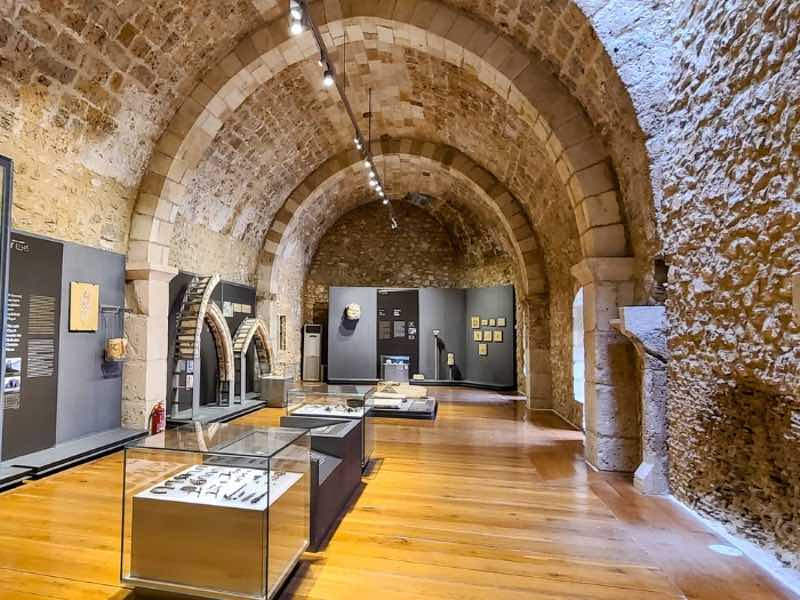
Chlemoutsi Castle – Peloponnese Peninsula – Photo Credit: M. Ibbott
Chlemoutsi Castle was built in the early 1220s by Geoffrey I of Villehardouin, ruler of the Frankish Principality of Achaea, as its main stronghold in the western Peloponnese Peninsula. Its hilltop position gave it wide views over the plain, the coast, and the route inland, so it served both a defensive and strategic purpose. There is a small museum inside that helps give a sense of castle life during the Frankish period. The interior courtyard and ominous fortress walls are impressive and provide a different perspective from the ancient ruins at Olympia.
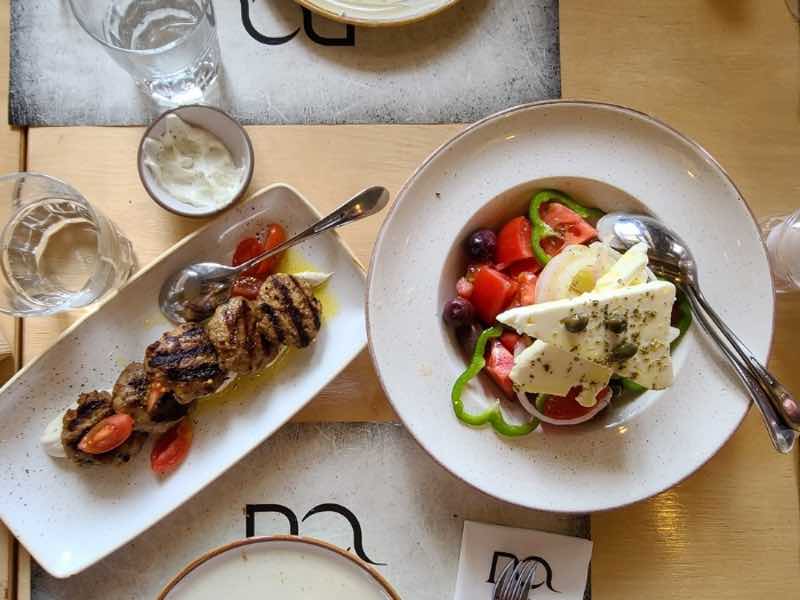
Palia Agora Restaurant – Kyparissia, Greece – Photo Credit M. Ibbott
As we started heading south towards Kalamata, we made a stop in Kyparissia. I mentioned it because it also delivered one of the best meals of our trip to Greece. Located on the Ionian Sea, the harbor and city streets were the perfect place to slow down and walk around. We stopped at the main square and had a beverage as we watched locals enjoy the afternoon.
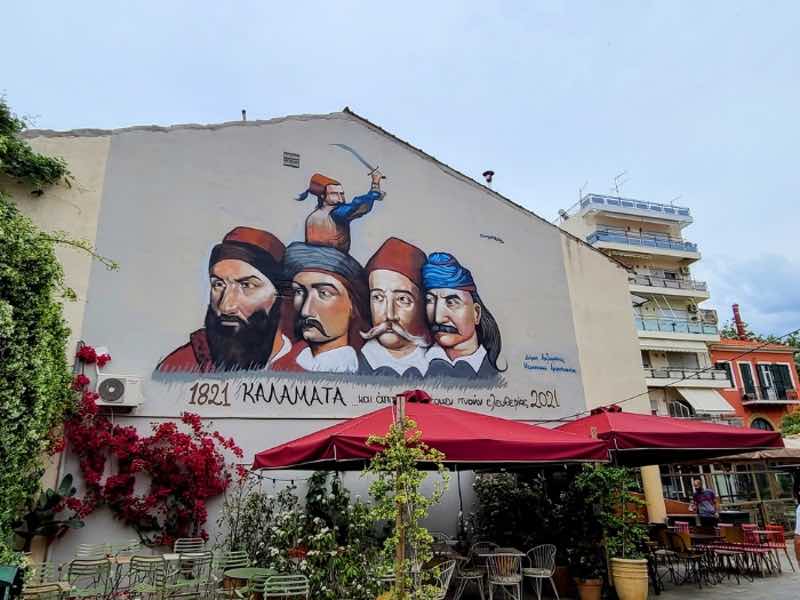
Kalamata, Greece – Photo Credit: M. Ibbott
Kalamata Day Trips: Olive Groves, Castles, and Monasteries
Once you leave Kyparissia, head about 65 km south to Kalamata, a city instantly recognizable for the olives that share its name. Greece is one of the world’s major olive-growing countries, with olive cultivation shaping the landscape, economy, and cuisine across the Peloponnese Peninsula. In the Messinia region, the road to Kalamata is lined with olive groves.
Kalamata is the capital of Messinia and one of the most important cities in the southern Peloponnese. It has a long waterfront, an active port, and a beach scene, where you can stop for a swim or settle into one of the beach club bars before heading inland again for Mystras or the coastal Koroni Castle.
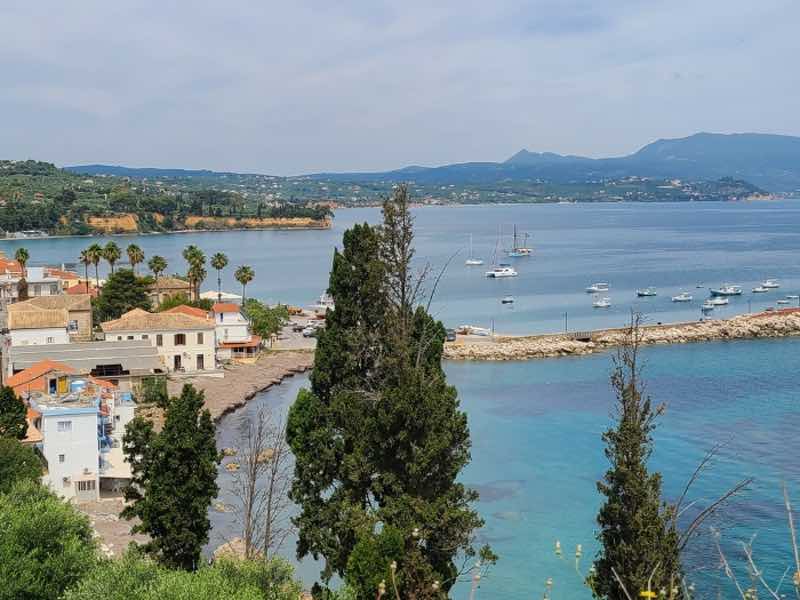
Koroni, Greece – Peloponnese Peninsula – Photo Credit: M. Ibbott
Koroni Castle and St. Eleistria Church
From Kalamata, Koroni is an easy coastal drive, and the walk to the castle is part of what makes this stop worthwhile. You move through a small cluster of houses, down narrow lanes, and through buildings before reaching St. Eleistria Church. You reach a small square around the church that opens onto wide views of the sea, and the nearby cemetery adds another layer of interest to this corner of town. It was fascinating to see the small shops and storekeepers keeping a close eye on us.
At St. Eleistria, I was handed a large scarf to cover my bare shoulders, which was a useful reminder to dress respectfully in religious places. It was a small moment, but it stayed with me. Koroni is not just about a castle; it is about how the town, the church, and the sea all sit together in one compact setting.
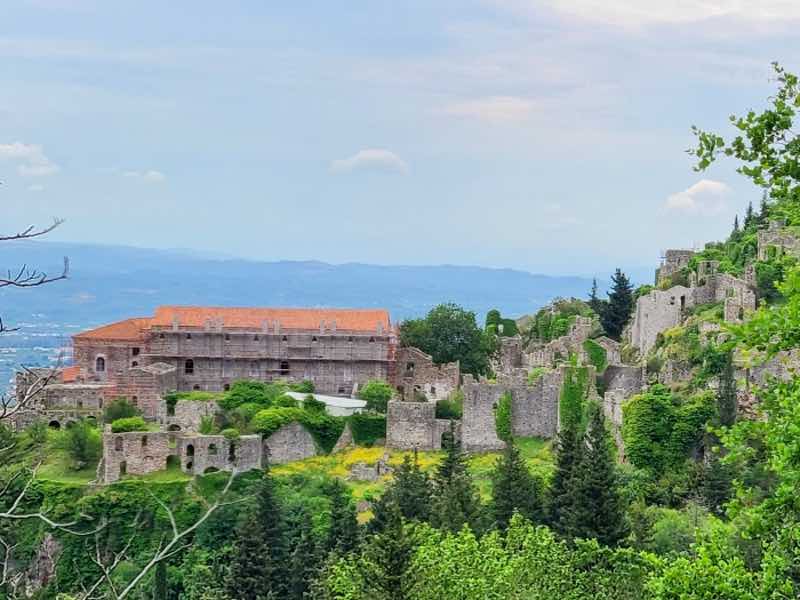
Mystras, Greece – Peloponnese Peninsula – Photo Credit: M. Ibbott
The Mysteries of Mystras
The drive from Kalamata to Mystras can be challenging but rewarding. If you take what you think is the shortest route, you will be mistaken because it is treacherous and time-consuming. It is a series of switchbacks that will have you questioning why you wanted to see Mystras in the first place. The highway route is less challenging but not as scenic as the mountain climb. On our return to Kalamata, we opted for this route as the sun was setting. These are the thrills of a road trip!
Mystras is a UNESCO World Heritage Site, inscribed in 1989, and it is one of the more important Byzantine places in Greece. It is not a single ruin but a hillside castle town, built high above Sparta and spread across the slope. You can enter from two different points, which give you completely different perspectives.
Mystras is a layered medieval settlement rather than one monument. There is a fortress at the top, then churches, monasteries, palace remains, stone streets, and fragments of homes and public spaces below. The site gives a strong indication of how this Byzantine center once functioned, both as a political stronghold and as a place of religious and cultural importance.
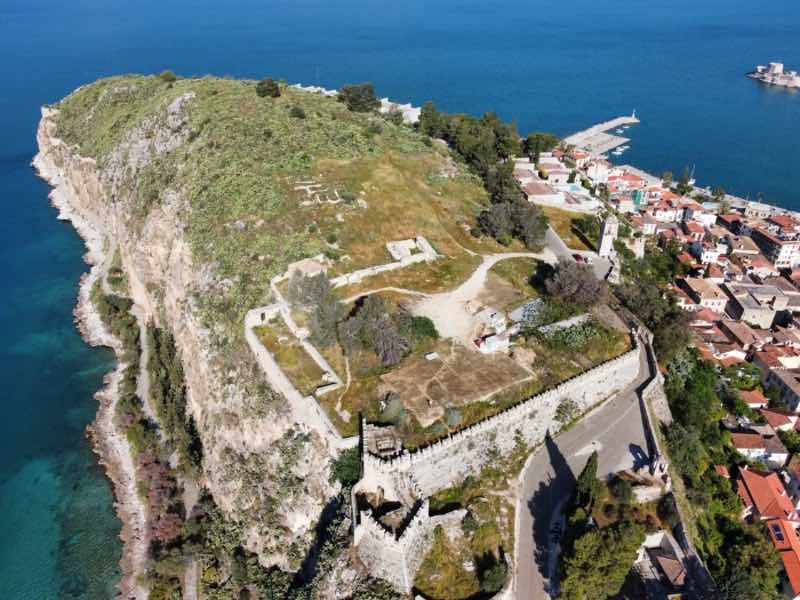
Napflio, Greece – Peloponnese Peninsula – Photo Credit: J. Johnston
Why the Peloponnese Works for a Road Trip
The Peloponnese Peninsula rewards curiosity, and the easiest way to see it properly is by car. Modern roads make this route manageable while giving you the freedom to stop where you want, making it personal rather than packaged. With three base cities, one rental car, and a little willingness to follow the road beyond the obvious, this part of Greece opens up in ways that feel both easy and memorable.
There is much more to discover beyond the islands, and some of Greece’s richest travel moments sit just a few hours from Athens. Whether you choose the Peloponnese, Western Crete, or mainland Greece, there are plenty of road-trip itineraries worth exploring. This was our first trip to Greece, and I am so glad we decided to focus on Athens and the Peloponnese Peninsula. It gave us a great introduction to the culture, the food, and the country. It whetted our appetite for the islands. That will be next on our return trip to Greece.
 Travel to Athens, Greece – Episode 832
 Athens, Greece, National Museum of Archeology – Video Episode 50
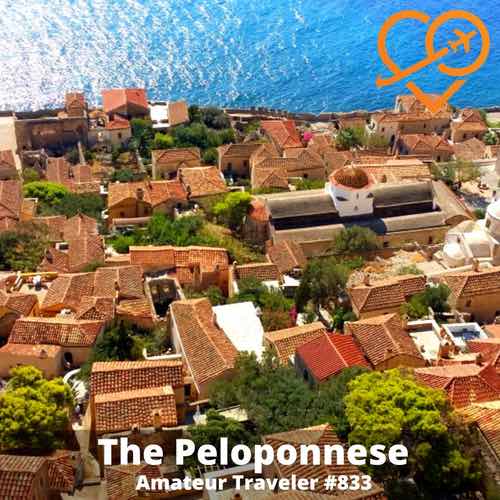 Travel to the Peloponnese, Greece – Episode 833
 Trip Journal – Greece (Athens)
by Margarita Ibbott
Margarita Ibbott is freelance writer and content creator on DownshiftingPRO.com, a travel and lifestyle blog focusing on traveling to the US, Canada, Colombia, and Europe. This travel website brings unique insight into museums, cultural activities, and luxury accommodations. She loves a good girl’s getaway and traveling with her adult children—family travel but with cocktails. Colombian by birth, Canadian by nationality, she’s here to help others organize their lives and travels. Her articles can be found on MSN (US) and other media outlets in the US.Leave a Reply
Tags: article, greece, peloponnese