
Austria is often overshadowed by its larger neighbors but holds a certain appeal as a quintessentially European travel destination. The glorious cities of Vienna and Salzburg contrast nicely with friendly little towns and farming communities. One can go skiing or hiking in the Tirol or simply meander pointlessly through the country’s many wine regions. Let me fill you in on a budget traveler’s Austria.
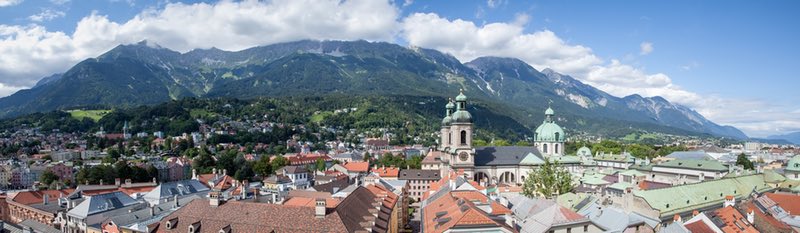
Innsbruck
The hostels of Innsbruck aren’t up to much, in fact, they’re mostly terrible, but with premier skiing on its doorstep and a lively atmosphere, it’s lots of fun. During the warmer months, the tourism board organizes free guided hikes which include boots and bus transport from town to the mountains. Yes, free transport, equipment, and a guided day-trip in the Alps. This is a dream for budget travelers. Do bring some cash though to buy a drink or some hot food in the mountain houses.
Listen to the Amateur Traveler episode on Travel to the Tyrol (Tirol) Region of Austria.
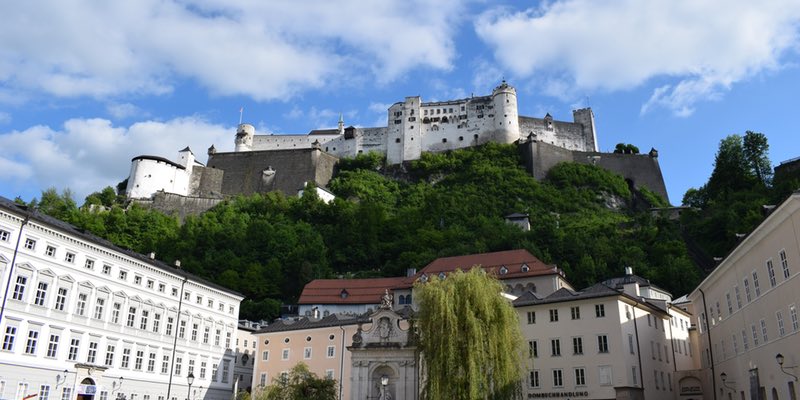
Salzburg
A little north is Salzburg, most noted as a setting for the Sound of Music, but Mozart also plays an important part in the cultural attraction. There are some cool independent hostels here and one great (or terrible?) hostel, the Yoho International Youth Hostel, plays that film every evening 365 days a year.
There’s enough to capture your heart just walking around the town but you might want to splash out on a visit to the fortress which dominates the skyline. Like most Kiwis, these hulking masses of stone hold both a romantic attraction as well as an amazing quality when one thinks of how they were built and how long they have stood.
Listen to the Amateur Traveler episode on Travel to Salzburg, Austria
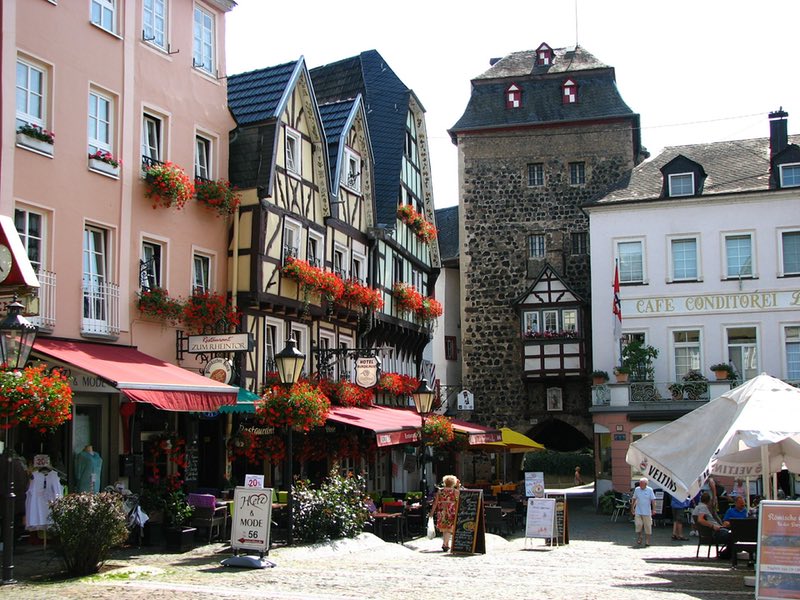
Linz
Linz isn’t too impressive. Despite being 2009’s European City of Culture, a day trip can easily cover it. Highlights include the Ars Electronica Centre which is a must for any geek. Everything’s hands-on: new media technology and interfaces spring up everywhere. Amongst more traditional displays are plenty of games and other entertainments.
If the weather’s good you can catch a tram up the Postlingberg to look out as far as the Alps or head back 150 years of entertainment and visit the Grottenbahn where mechanical dwarfs loom from the rock.
- Get a Car Rental
- Buy Travel Insurance
- Get a universal plug adapter
- Get an eSim to be able to use your smartphone abroad.

Graz
If you like jazz, Graz (pronounced something like “Gratz”) is a good place to drop by. Add some fantastic new architecture along the river-front to the old narrow streets and there’s something lovely about it. Budget airlines make prominent use of Graz airport so if you land here don’t skip by…stop a couple of days, visit the “friendly alien” and consider heading south into the nearby wine and spa regions of Styria. Be warned: many tourists get off the train a stop early on their way to the airport. You want the “flughafen” stop!

Vienna
The cities of Austria are crowned by Vienna, home of too much architecture and too many good museums. There is too much to do in one day so consider a 3-day itinerary in Vienna. Guidebook travelers run the risk of severe museum-overuse syndrome. For this, the MuseumsQuartier at the bottom of Mariahilferstrasse is the place. This neighborhood includes 8 museums from art museums to a children’s museum.
Many good hostels abound at the top end of the street near the Westbahnhof, which is the main international train station. My advice? Buy a 24-hour “Vienna ticket” for a couple of euros and get a free tour around the city on one of the city’s circle trams.
Then, on a fine day, buy a picnic lunch and head to the Schloss Schönbrunn. I’ve never been inside the palace, but wandering the gardens and picnicking on the grass overlooking all of Vienna is fantastic. For a couple of euros, you can try your hand at the maze and the labyrinth, which has water and audio challenges and a great playground!
A great way to save money when you visit Vienna is the Vienna Pass. This pass covers more than 60 top attractions including a hop on-hop off bus tour, entrance to the major museums and palaces, the Vienna Giant Ferris Wheel, and more.
Listen to the Amateur Traveler episode on Travel to Vienna, Austria

Get Out of the City
Traveling through Austria at the moment seems like a life-sized art experiment. Spring rains followed by unseasonable sunshine and heat have brought a deep vibrancy to the trees: greens, browns, and yellows sit sharply against each other, especially contrasted with the occasional tree covered in pastel-pink blooms. Lush green fields are interspersed with light-brown patches of dirt where finances or crop management have stopped farmers planting. Every now and again, however, one comes across a field of rapeseed, looking like God decided to draw highlighter-yellow lines across creation.
Easy transport connections and cheap hostels mean most budget travelers are drawn from city to city but, like most of Europe, the “Europe we came to see” is in the towns.
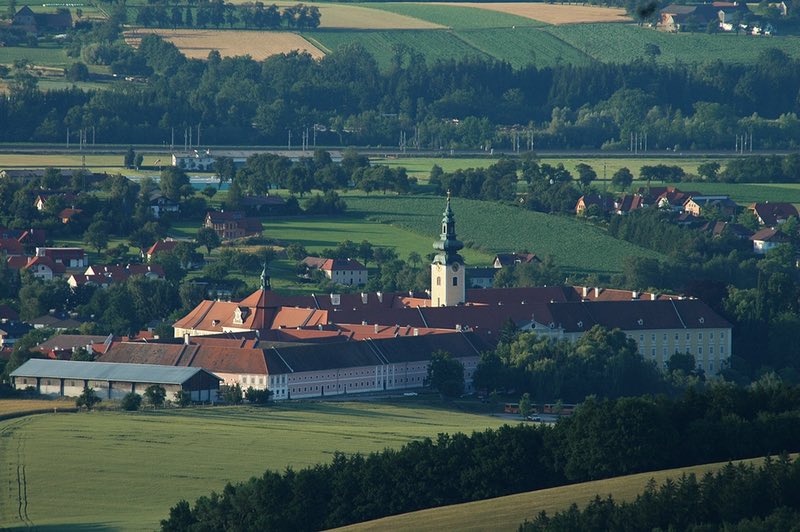
Mostviertel
The Mostviertel is a delightful district in Lower Austria (Confusingly, Lower Austria is the area surrounding and to the west of Vienna). Sonntagberg dominates the region with its church being the site of a yearly pilgrimage and market. Named for “most”, a bitter local cider, the farming communities, and industry of the region make for nice walks and towns.
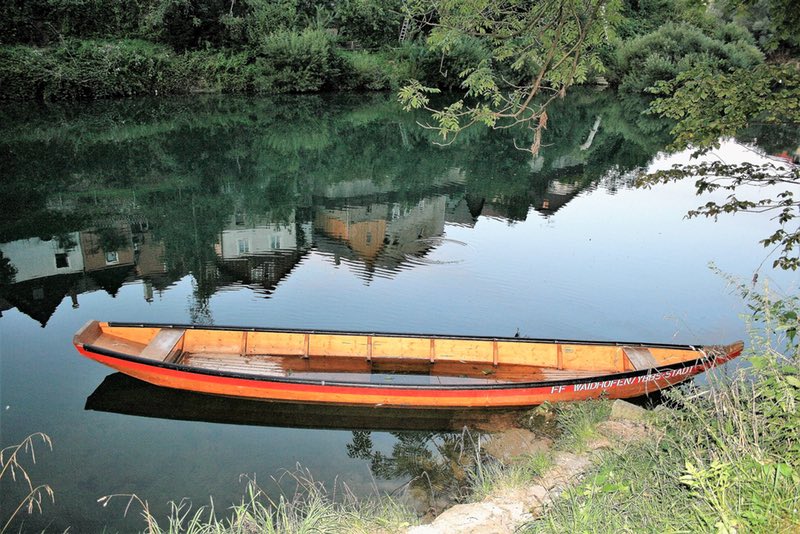
Waidhofen
Waidhofen is the place to base yourself for the exhibition; a cute little town with nice cafes and restaurants, it’s been given a comprehensive makeover giving it a modern, arty feel. Linda and I were lucky enough to be there for Waidhofen’s annual night market, see a short slideshow/video here.

Styria
Styria, the area south of Graz, suffers from the lack of fast, regular transport between towns but the effort of traveling is often well rewarded since this is a premier wine and spa region. There are several tour companies operating out of Graz, so that makes a good base to explore from…but do try and stay out of the city for a bit!
One of the few places I’ve been lucky enough to spend time in is the area around Bad Tatzmannsdorf. It’s a “wellness” town with accommodation options from campsites to five-star resorts, all based around the natural springs. It also has an interesting outdoor museum and wonderful ice creams!
Neusiedl am See
One thing I miss in Europe is the beach. Neusiedl am See is a popular summer town on the bank of a large lake. Wine is a big part of Neusiedl am See. One of the local high schools offers a winemaking class and there are several vinoteks and heurigers with great local fare. Boats and cycles are available for hire and the cycle tracks are amazing — taking you through farmland, wetlands, and waterfront…or, from winery to winery.
There are plenty of other cool, relaxed places which I haven’t mentioned. Leave a comment below to let us know your favorite out-of-the-way spot.
Getting into Austria
Trains are frequent from all local countries, best to check oebb.at for current schedules. If you’re coming from Cesky Krumlov, we’ve found the shuttle bus to Linz affordable (500kr) and a great time-saver.
Budget airlines fly from many centers into Salzburg, Graz, Linz, and Bratislava. Bratislava? Yes, they fly into Bratislava and you can catch a train or shuttle bus from there to Vienna. Make sure you check your tickets; some people have been surprised!

Getting around Austria
Taxis and buses are cheap enough, but trains are the most convenient way from town to town. They are run by ÖBB (oebb.at) and their red logo is easily recognizable. Many large stations have staff (although your chances of finding an English speaker is 50/50) as well as red touch-screen ticket machines. We’ve found these to be the easiest way to buy tickets – just hit the “English” button first, choose your destination and amount of people then feed in some money. If there are no ways to pay at the station, just board the train and pay for your ticket onboard. It’s about 10% more expensive, but from some rural stations, there isn’t another option.
Under 26? €19 will get you a Vorteilscard which gives you a 45% discount on every train journey for a year. If you’re spending a fair bit of time there or traveling across the country, buy one as soon as you enter the country and you’ll save a ton.
 If you’re over 26 a Vorteilscard will give you the same discount, but set you back €99. Vorteilscards are available from any manned station; have some photo ID and a passport-sized photo available. When we caught the train from Venice to Vienna we bought our Italian ticket to the first major Austrian town, disembarked, bought a Vorteilscard and caught the next train…we almost made the cost back on that trip alone!
If you’re not in the country long enough to warrant a Vorteilscard, simply traveling with a friend will save you some cash. You get more of a discount the more people are traveling together, and the ubiquitous ticket machines automatically give it to you.
Getting out of Austria
Graz airport is small and seldom crowded — they also have free internet terminals to help pass the time and expensive wifi if you’re that way inclined. The wine selection after security is small but reasonable. The only other “Austrian” airport I’ve flown into is Bratislava, which is small but efficient.
Why don’t you jump in a shuttle from Linz to Cesky Krumlov in the Czech Republic or head west into Liechtenstein then Switzerland? Germany’s always an option or skip through Slovenia to the Croatian beaches or head into Slovakia or Hungary…There are so many options only a few euros’ train ride away. Enjoy!
 Travel to Vienna, Austria – Episode 384
 Austria Road Trip – Episode 814
 11 Exciting European Night trains and How to Use Them like a Pro
 Travel to Salzburg, Austria – Episode 432

Henry Riley
Says:September 26th, 2017 at 3:33 pm
Hey Craig, loved the article.
My tour company Live The Venture plans on beginning tours to Salzburg during our Oktoberfest tour in 2018. I really enjoyed reading about the other locations in Austria that are worth seeing, the architecture is really stunning.
I would love to visit Vienna and have always been intrigued by it after seeing the movie Before Sunrise. Europe is one of those magical places where you can visit the past while enjoying the amenities of the present. Also great pictures, really enjoyable read.
Live, Travel, Love, Learn and Venture On!
European Taxi - Martin Stich
Says:January 7th, 2018 at 3:03 am
Hi Craig,
great article and plenty of useful information. I admire articles like this one. Keep up the great job!
Martin
Jennifer Grey
Says:January 11th, 2018 at 5:28 am
I learnt during my childhood days that Austria is the home for legendary personalities, who contributes largely to music and neuroscience. I am a music lover, I definitely would love to visit Salzburg to visit Mozart museum, Thanks for providing some deep insights on landscape of Austria through your post.
Lorenz
Says:May 24th, 2025 at 11:07 pm
As for Salzburg: „Mozart plays an important part“? He was born there! His birth house is the main attractions of the city and everywhere you go you can buy Mozartkügeln (Mozart orbs), a mix of pistachio, marzipan, and nougat that is covered with dark chocolate and rolled into a ball. The famous music university there is called the Mozarteum.
I should mention that Mozart is on the back of the 1 Euro coin, probably the most-used piece of currency in Austria.
You totally neglect to mention the Salzburger Festspiele – a series of music and theatre festivals which has its own campus with three very large theatres/concert halls, and numerous smaller venues (one of the big theatres is named the Haus für Mozart). In 2006 – to celebrate Mozart’s 250th birthday – all 26 of his operas were staged. It is known mostly for the huge summer festival (mid-July through the end of August, with many events every day from early morning to midnight) featuring the most prominent musicians in the world (and the highest prices, too, mostly for the operas), but it also is home to the Osterfestpiele (Easter Festival) and Pfingstfestspiele (Whitsun Festival), both of which offer staged operas and many concerts and recitals.
And just to be picky, Wien (Vienna) is one of the nine states which comprise Austria, so it is not merely a city (and I live there).
Since you wrote this, Westbahnhof has been downgraded to use mostly for regional trains. A new Hauptbanhof (main train station) has been opened some distance away and now serves most international rail travel. Many of the hostels near Westbahnhof have closed (I live five minutes away on foot, and used to stay in one when I had too many houseguests and only one bathroom!).
I gather that you are not much of a music fan, as you fail to mention that Wien is the world capital for classical music and opera. We have three fulltime opera houses (Wiener Staatsoper, Theater an der Wien, and Volksoper Wien) and smaller companies (such as Neue Oper Wien, for contemporary opera), plus some of the greatest concert halls in the world. Musikverein – from where the annual New Year’s Day concert by the Wiener Philharmoniker is telecast around the world – has a magnificent history, and what are generally regarded as the most perfect acoustics in the world. Nearby is the Jugendstil (art nouveau) Konzerthaus. Both of these houses have main halls, plus numerous smaller halls used for recitals, chamber music, and jazz. We have four world-class symphony orchestras (Wiener Philharmonniker, often regarded as the greatest orchestra in the world; Wiener Symphoniker; Rundfunk-Symphonieorchester Wien; Tonkünstler Niederösterreich).
There are literally thousands of music events every year. This evening I will hear legendary pianist Elisabeth Leonskaja (now 89-years-old) play Beethoven’s last three piano sonatas in the small Mozart-Saal at Konzerthaus; next Sunday I will hear at 11:00 an orchestra from an American university, the UC Berkeley Symphony Orchestra, play Gustav Mahler’s seventh symphony in the Großer-Saal (large hall), and at 15:30 that afternoon in the same hall I will hear the Tonkünstler play Mahler’s eighth (known as the „Symphony of a Thousand“ due to the insane number of musicians it takes to perform it).
Both concert halls also offer concerts of classical music’s „greatest hits“ played by amateurish orchestras geared to tourists (some play in powdered wigs and waistcoats) just to give them a chance to see the magnificent architecture of the halls and hear … a little Mozart. One of his houses here (he moved a lot) is now fashioned into a museum in the First District, just steps from Stephansdom, the cathedral in which he was married and in which his funeral was held.
On the edge of town is Zentralfriedhof, the huge Central Cemetery, which has a magnificent Jugendstil church, graves of honour (politicians, but also famous singers and actors and entertainers; international pop star Falco is buried there), and a „Composer’s Grove“ which features the tombs of Beethoven, Brahms, Schubert, Johann Strauss (both father and son), Gluck, and dozens of lesser-known composers from the early 19th century to late 20th century composers such as Arnold Schönberg and Frederic Cerha (there is a monument to Mozart but he’s not there – in fact no one is exactly sure where he wound up in the now-unused St-Marxer Friedhof as he was totally broke when he died at 35 and had a pauper’s funeral in bad weather in December 1791). Part of it is the old Jewish cemetery, which is unkempt and eerie. One will notice that the most recent burial dates are in the early 1940s, and today there are no relatives to keep-up the grave sites, which have fallen into ruin, some by nature, some by vandalism, and all of it overgrown. The entire cemetery offers a fascinating history lesson. On public transportation it takes only about 20 minutes to get there from the centre of Wien, but you can spend hours there.
The interior of Schloss Schönbrunn is amazing and I highly recommend the longer, more expensive tour which gives you access to more of the palace, as well as buildings on the grounds, such as the carriage house in which the golden carriages of centuries past are kept. And you forget to mention the Zoo on the palace grounds! It is one of the most-visited in Europe.
Travellers should also know the correct names of places (I see in another article that you differentiate between the state of Tirol and the Anglicised „Tyrol“). „Vienna“ is the Anglicisation of Wien (but we – mostly – will understand if visitors choose to use „Vienna“), but to the south, what you call „Styria“ may not be understood, as the correct name is Steiermark; it should also be noted that Graz is the capital city of the large state of Steiermark, and that „Styria“ is not merely „the area south of Graz“.
Finally, you need to make clear that Bratislava is NOT in Austria, but rather is the capital of Slovakia. One can take a one-hour train ride through the fields of Burgenland (another Austrian state) to Wien for very little (my most recent visit cost 19 € round trip and included public transport in Bratislava). However, Slovakia has taken a hard swing to the right in its politics, and this may make travelling between the two countries more difficult that it has been in recent decades. Passport checks may soon again be required.
I must also say that, due to its current extremely harsh autocratic regime, tourists should avoid Budapest and Hungary in general. There is no longer a free press, many human rights have been taken away, and one could be arrested on the streets for no discernable reason. There is a great civil upheaval at this time, with many marches and arrests.
Before making any travel plans one really must do some research from reliable sources on current political conditions and how they relate to tourism. Let me finish by saying that Austria recently avoided being taken-over by an autocratic political party which won a record-high 29% of the vote, but none of the other parties (we have five main political parties) would agree to work with the far-right to form a majority coalition in parliament. Months after the election, we finally have a governing tripartite coalition composed of parties representing the centre right, the centre left, and a new, younger liberal party. So we are set for the next five years!
Lorenz
Says:May 24th, 2025 at 11:56 pm
I would like to offer an addendum (and a correction) to my earlier, overlong comment. First: Elisabeth Leonskaja is 79, not 89!
Here are the correct names of the nine states of Österreich (Austria), the Anglicised names, the capital cities, and the chances of being able to get around without speaking German.
From east to west:
Burgenland / Burgenland / Eisenstadt / very little English
Niederösterreich / Lower Austria / Sankt Pölten (Saint Pölten) / moderate English
Wien / Vienna / it is a self-contained city-state located in the middle of Niederösterreich / best chances of English being understood, but this will go down as you get farther away from the centre of the city; Wien is divided into 23 sections, called by a number and the word Bezirk (say bay-TZEERK); the 1. Bezirk (erste Bezirk) is the historic centre of the city; immediately surrounding it – 2. through 9. Bezirk – you will do well with English; outside of that, chances get pretty slim
Steiermark / Styria / Graz / moderate English in Graz, very little outside
Oberösterreich / Upper Austria / Linz / moderate English in Linz, very little outside
Kärnten / Carinthia / Klagenfurt / very little English
Salzburg / Salzburg / Salzburg (this can be confusing, as the capital city shares its name with the large state in which it is located) / much English in the city, very little outside the capital
Tirol / Tyrol / Innsbruck / moderate English in Innsbruck, very little outside the capital
Vorarlberg / Vorarlberg / Bregenz / very little chance of English being understood (but Bregenz marks the point where der Schweiz (Switzerland), Österreich (Austria), and Deutschland (Germany) all converge at the Bodensee (Lake Constance), and the scenery is breathtaking, and in the summer there is a big music festival – Bregezer Festspiele – which offers mostly operas, on a stage floating on the lake which plays to an arena of 7.000 people on the shore, a modern indoor Festspielhaus, and several other theatres and performance spaces)