Travel to Dominica – Episode 1006
categories: caribbean travel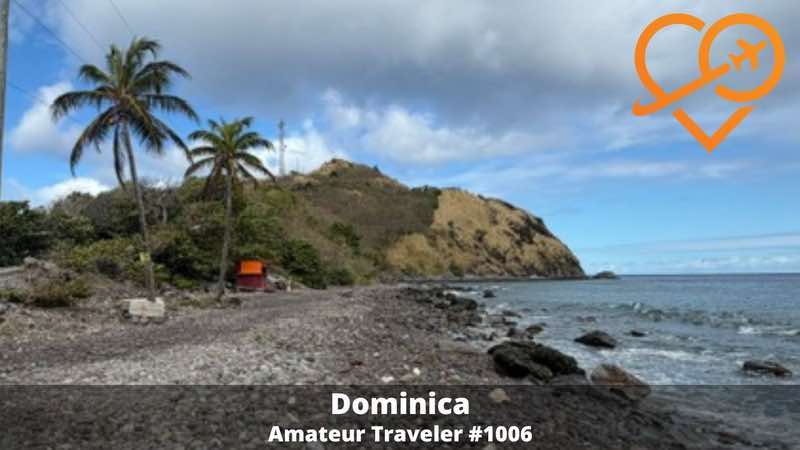
In this episode of Amateur Traveler, Sam Williams joins Chris to talk about the Caribbean island of Dominica, a destination he describes as “unspoiled Caribbean.” Unlike many Caribbean islands, where the main draw is the beach, Dominica is known for its rainforest, mountains, waterfalls, hot springs, snorkeling, whale watching, canyoning, and sea turtles.
Sam recommends spending about a week on the island, renting a car, and using the Roseau area as a base for much of the trip before finishing on the wilder east coast near Rosalie Bay.
Why Visit Dominica?
Sam says Dominica is a good choice for travelers who want a Caribbean island experience that feels different from the standard resort-and-beach vacation. The island has beaches, but its real appeal is its jungle interior, dramatic waterfalls, volcanic activity, rugged roads, and low-key feel. Outside of cruise ship days, many sights can feel surprisingly uncrowded.
Dominica is also a good destination for active travelers. Sam’s itinerary includes hiking, snorkeling, whale watching, waterfall swimming, hot springs, canyoning, and turtle conservation. It is not necessarily the easiest Caribbean island to visit, but that is part of what keeps it feeling less developed and less crowded.
Getting to Dominica
Sam notes that getting to Dominica can be one of the trickier parts of the trip. From the U.S., American Airlines flies from Miami, while United has limited flights, including service from the New York area. Travelers can also connect through other Caribbean islands on smaller regional airlines.
The airport is on the northeast side of the island, while Roseau, the capital, is on the southwest coast. Because Dominica is mountainous and the roads involve switchbacks, the drive from the airport to Roseau takes about an hour and 15 minutes, even though the island does not look large on a map.
Sam recommends renting a car. There are minibusses, but they do not run frequently enough to make them convenient for the kind of itinerary he suggests.
Arrival Day: Drive to the Roseau Area
On arrival, Sam recommends picking up a rental car and driving toward Roseau. He suggests basing yourself in or near Roseau for the first part of the trip because the west side of the island has the most accommodations and many of the island’s main attractions.
He recommends stopping at a grocery store near Roseau, picking up supplies, and settling into a rental house, Airbnb, VRBO, or hotel. Dominica has some resorts and hotels, including properties such as the InterContinental, Jungle Bay, and Fort Young Hotel, but Sam found a rental house especially useful for a self-drive trip.
Day 1: Portsmouth, Indian River, and the North Coast
For the first full day, Sam recommends driving north along the west coast toward Portsmouth. This route is a good way to get used to driving on the left side of the road because it follows the coast and is less demanding than the mountain roads.
The first major stop is Indian River, one of Dominica’s freshwater rivers and one of the few navigable rivers on the island. Visitors take a guided rowboat tour through the brackish river environment, looking for wildlife such as crabs, iguanas, birds, and fish. No motors are allowed. The tour ends at the Bush Bar, a small local bar known for rum punch.
Indian River is one of Dominica’s national sites, so visitors need a site pass. Sam explains that travelers can buy a single-site pass, a day pass, or a week pass, depending on how many national sites they plan to visit.
After Indian River, travelers can choose among several options in the north. Cabrits National Park offers a fort and hiking trails. Batibou Beach is one of Dominica’s best-known beaches, with white sand, jungle scenery, and a more secluded feel. For hikers and birders, Syndicate Falls offers a chance to hike to a waterfall and possibly see the rare Dominica parrot.
Sam and his family ended the day at Mero Beach, a black-sand beach popular with locals. It has beach shacks, swimming, and a good sunset view.
Day 2: Whale Watching, Roseau, and Champagne Beach
Sam recommends timing this day for a non-cruise-ship day if possible. He started with a whale-watching trip from Roseau with Waitukubuli Tours. Dominica is known for its year-round population of sperm whales, and humpback whales may also be present from December to April. On Sam’s trip, they saw humpbacks, sperm whales, and beaked whales.
The whale-watching trip lasts about three to three and a half hours and leaves from near the ferry terminal in Roseau. Sam recommends bringing sunscreen, a hat, sun-protective clothing, water, and cash for tipping.
After whale watching, Sam suggests spending a little time in downtown Roseau. The cruise terminal market has typical souvenir items, but it is worth a short walk if you are already there. Fort Young Hotel is a good option for lunch on the water. The Roseau Botanical Gardens are another possible stop for travelers interested in Dominica’s flora.
In the afternoon, Sam recommends Champagne Beach, one of Dominica’s signature snorkeling spots. Volcanic vents beneath the water release bubbles, making it feel like swimming in a glass of champagne. The shore is rocky, so Sam recommends Tevas, water shoes, or closed-toe sandals. Snorkel gear may not always be available on-site, especially on non-cruise days, so travelers should bring their own or arrange it ahead of time.
The best bubbling area is not right at the first entry point. Sam says to go to the far end of the beach and then swim even farther along the shoreline to find the larger concentration of volcanic vents.
Day 3: Middleham Falls, Trafalgar Falls, and Hot Springs
For a cruise-ship day, Sam recommends heading inland for a rainforest hike. His choice is Middleham Falls, a jungle waterfall hike in the center of the island. The trail is about two to two and a half miles each way and includes some rock scrambling, river crossings, and muddy conditions, especially when it rains.
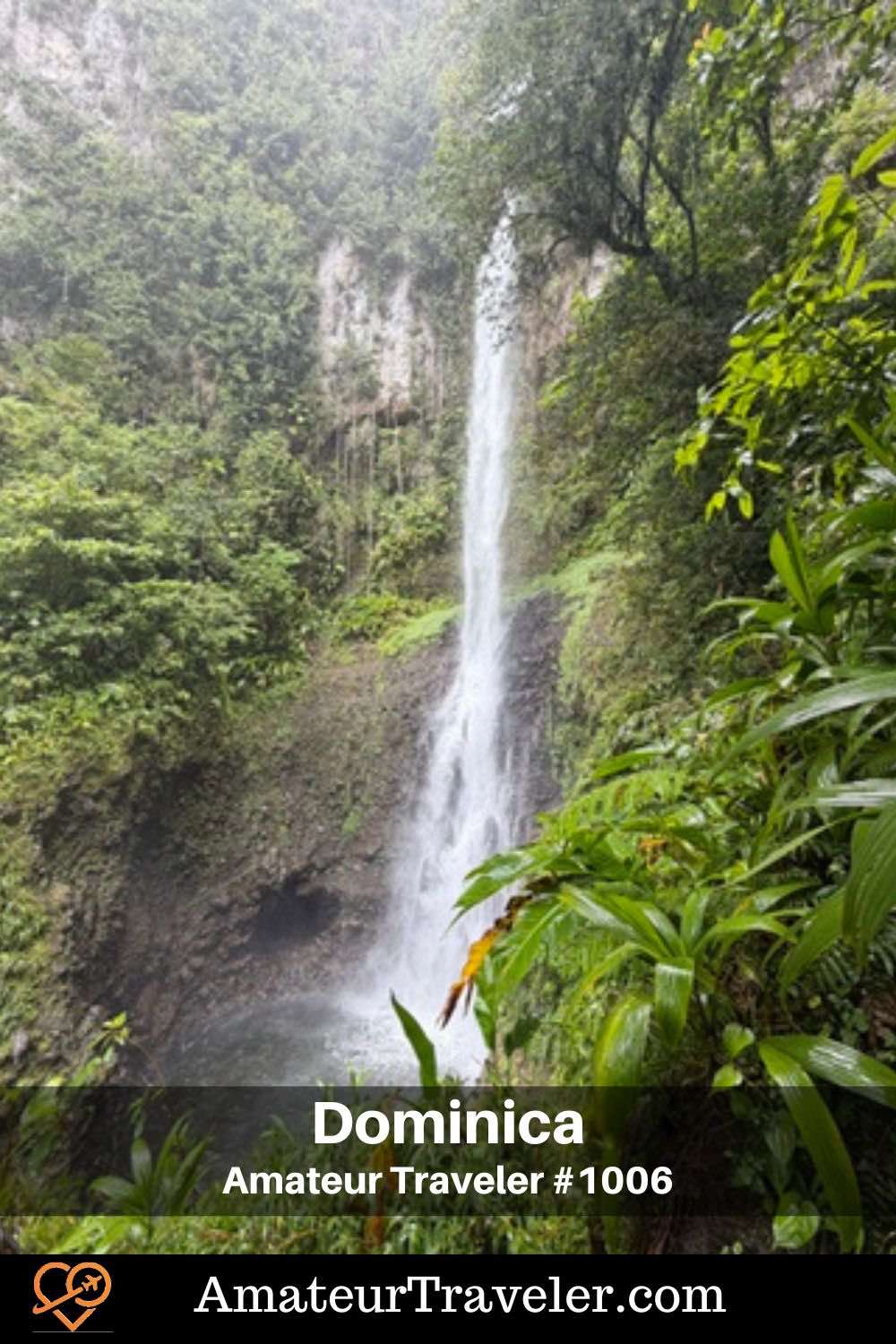
The reward is a tall waterfall dropping into a pool in a lush rainforest setting. Sam and his family had the waterfall to themselves. The hike also includes a section of the Waitukubuli Trail, a long-distance trail that crosses Dominica in 14 segments.
After Middleham Falls, Sam recommends visiting Trafalgar Falls, one of Dominica’s most famous sights. The falls are known as the Mother Falls and Father Falls. One side has cold water, while the other has warmer water from geothermal activity. Trafalgar Falls has more infrastructure than many other sites, including a parking area, a visitor center, and a short boardwalk to the viewpoint.
More adventurous travelers can scramble closer to the base of the falls, either on their own or with a local guide. Sam also recommends River Rock Cafe, south of Trafalgar Falls, for lunch, especially the fish or chicken with homemade Creole sauce.
The day ends well at one of the area’s hot springs. Sam visited Tia’s Hot Spring, which has a garden setting and several pools ranging from cold to very hot. He notes that these are natural, mineral-rich pools, not clear resort-style spa pools.
Day 4: Scott’s Head and Canyoning
Sam recommends starting this day at Scott’s Head, the southern tip of the island, and the starting point of the Waitukubuli Trail. Visitors drive across a rocky spit of land, park, and walk to the far end for snorkeling.
The entry can be rough because of waves and rocks, but once past the first few feet, the water is calmer. Sam says the coral reef is healthy, and it is a good place to see turtles. The area also has a short but steep hike up to a lookout, with views of the Caribbean Sea on one side and the Atlantic Ocean on the other.
In the afternoon, Sam recommends canyoning with Extreme Dominica, one of the island’s best-known adventure operators. Canyoning involves moving down a river canyon by swimming, jumping off waterfalls, rappelling, and floating through narrow rock passages. Extreme Dominica offers a standard canyoning option as well as a more advanced trip that includes rappelling down Trafalgar Falls.
Sam’s own canyoning trip was canceled because of flooding, but he was impressed by the company’s safety standards. He recommends booking early in the trip, and preferably in the morning, so there is more flexibility if weather causes delays or cancellations. Bring water shoes, a towel, a small backpack, and a GoPro or waterproof camera if you have one.
Day 5: Waterfall Day and Rosalie Bay
The next day, Sam recommends leaving the Roseau area and driving across the island to the east coast, staying near Rosalie Bay. The east side is wilder, more Atlantic-facing, and less developed. Because Dominica’s road network is limited, places that look close on a map may require a much longer drive.
Sam calls this “Waterfall Day.” The first stop is Spanny Falls, a privately owned waterfall that can be reached by paying at Spanny’s convenience store. The trail leads through a lush, Fern Gully-like setting to a waterfall and emerald pool where visitors can swim. There is also an Upper Spanny Falls, but reaching it requires a more strenuous scramble.
Spanny is also known for making bush rum, a potent local infused rum. Sam tried the honey version but warns that it is strong, especially if you still have to drive.
The next possible stop is Jacko Falls, another waterfall and swimming spot. It is a government-owned site, so the national site pass applies. Sam says travelers could choose either Spanny Falls or Jacko Falls if they do not want to do both.
The last waterfall stop is Emerald Pool, one of Dominica’s most famous sites. It has a short trail, a viewing platform, steps down to the water, and a beautiful jungle-framed pool. The waterfall itself is not as tall as some of the others, but the setting is especially pretty. The trail back includes a viewpoint over Dominica’s lush mountain landscape.
In the evening, Sam recommends checking into Rosalie Bay Eco Resort. The resort is known for its sea turtle conservation work. Guests can sign up for the turtle call list, so the resort will contact them at night if a turtle comes ashore to nest.
Day 6: Kalinago Territory and Turtle Conservation
On the final full day, Sam recommends visiting the Kalinago Territory on Dominica’s east side. The Kalinago are the Indigenous people of Dominica, and the territory is one of the island’s most culturally significant areas.
The main stop is Barana Aute, a living cultural center that introduces visitors to Kalinago history, architecture, food, and traditions. Sam recommends taking the guided tour because there is not much signage once you are outside the visitor center. He also suggests buying handicrafts in the Kalinago Territory rather than at the cruise terminal market, because these are made by Indigenous artisans. Baskets and small masks are among the items available.
Back at Rosalie Bay, Sam recommends doing the turtle talk offered through the resort’s conservation partners. The talk includes a walk on the beach, an explanation of nesting areas, information about leatherback, hawksbill, and green turtles, and a look at the conservation hut and protected nesting areas.
Leatherbacks usually nest earlier in the year, with April through June being a key nesting season, while hatching tends to occur from July into October. Sightings are not guaranteed, but the conservation program is a meaningful part of the Rosalie Bay experience.
Rosalie Bay also has a small boutique rum distillery that supports turtle conservation. Sam did not get to tour it because it was closed during his stay, but it is another unusual option for visitors.
Other Activities Sam Recommends
Sam mentions several additional activities that he did not have time to do but would consider on a return trip.
The Waitukubuli Trail crosses Dominica in 14 segments and offers a variety of hiking options, with waterfalls, rivers, lakes, and rainforest scenery. Boiling Lake and Freshwater Lake are two famous mountain hikes, though Boiling Lake is not a swimming destination for obvious reasons. Victoria Falls is another strenuous but rewarding waterfall hike.
Divers can base themselves at Fort Young Hotel in Roseau, which operates as a dive hotel. Dominica is also known for scuba diving and whale-watching.
Titou Gorge, near Trafalgar Falls, is another adventure option. Visitors swim or float through a narrow gorge to reach a waterfall. Sam cautions that the current can be strong, so weaker swimmers should wear a life jacket, use an inner tube, or be guided.
Practical Tips for Visiting Dominica
Sam recommends checking the cruise ship schedule when planning your days. Roseau and the most popular sites can be busier when ships are in port, but more remote or strenuous activities may still be quiet.
The rainy season overlaps with hurricane season, roughly June to December. Even outside the rainy season, travelers should expect rain in the mountains and rainforest. Bring rain gear for hikes, even if the coast is sunny.
Dominica drives on the left. Roads are often steep, narrow, and winding, and switchbacks are common. Sam says to use the horn on blind corners, not as a sign of anger but as a warning that you are coming around the bend.
Cash is important. Some places accept cards, but many smaller attractions, restaurants, hot springs, and local vendors require cash. Dominica uses the Eastern Caribbean dollar, though U.S. dollars are also accepted in many places. Sam recommends paying in Eastern Caribbean dollars when possible because rounded U.S. dollar prices may be slightly higher.
Restaurants can be limited, especially outside Roseau and resort areas. Sam’s family cooked many dinners and ate out for lunch when convenient. Travelers staying in rental houses should plan grocery stops and not assume there will be a wide range of restaurants open every evening.
Sponsors

- Upgrade your wardrobe with high-quality essentials and get free shipping and 365-day returns at Quince.com/TRAVELER.

- Save 50% on Unlimited premium wireless plans starting at $15/month at MintMobile.com/traveler.
- Get a Car Rental
- Buy Travel Insurance
- Get an eSim to be able to use your smartphone abroad.
- Get a universal plug adapter

- For a limited time, try OneSkin with 15% off using code TRAVELER at oneskin.co/TRAVELER.

- Find the card that fits your lifestyle and apply today at joinbilt.com/traveler

subscribe: rss feed | Apple podcasts

right click here to download (mp3)
Show Notes
Dominica
Roseau (Dominica) cruise port schedule
Roseau
Portsmouth, Dominica
Indian River
Cobra’s Bush Bar
Dominica Site Pass
Cabrits National Park
InterContinental Dominica Cabrits Resort & Spa
Batibou Beach
Syndicate Nature Trail
Dominica Parrot
Keepin’It Real
Mero Beach
Waitukubuli Tours
Fort Young Hotel and Dive Resort
Dominica Botanical Gardens
Champagne Beach
Middleham Falls
Waitukubuli Trail
Trafalgar Falls
River Rock Cafe and Bar
Tia’s Hot Spa
Jungle Bay Dominica
Scotts Head
Extreme Dominica – Canyon Experience
Spanny Falls
Jacko Falls
Emerald Pool
Rosalie Bay Eco Resort and Spa
Rosalie Bay Turtles
Nature Enhancement Team / Rosalie Sea Turtle Conservation
Kalinago Barana Autê
Kalinago People
Kalinago Territory
Boiling Lake Hike in Dominica | Hike Bike Travel
Freshwater Lake
Victoria Falls
Titou Gorge
Pirates of the Caribbean: Dead Man’s Chest
Community
on Travel to Paris, France – Episode 1002:
Hi Chris,
Not mentioned in the episode was my favourite museum in Paris, the Musee du quai Branly. The newest major museum in the city, it was a pet project of former President Jacques Chirac. Its striking glass architecture and lush green living wall sits in the shadow of the Eiffel Tower. Inside, the dim, atmospheric lighting and winding pathways create an immersive journey through an impressive collection of indigenous art, textiles, and artifacts from Africa, Asia, Oceania, and the Americas.
Jonty
 Travel to the Island of Dominica – Episode 146
 Travel to the Windward Islands of the Lesser Antilles in the Caribbean – Episode 402
 Travel to Saint Lucia – Episode 683
 Travel to Grenada – Episode 836
by Chris Christensen
Chris Christensen is the creator of the Amateur Traveler blog and podcast. He has been a travel creator since 2005 and has won awards including being named the "Best Independent Travel Journalist" by Travel+Leisure Magazine.+Chris Christensen | @chris2x | facebook
Leave a Reply
Tags: audio travel podcast, dominica, podcast