Travel to Fiji (Yasawa Islands, Taveuni, Ovalau, and Viti Levu) – Episode 1003
categories: pacific travel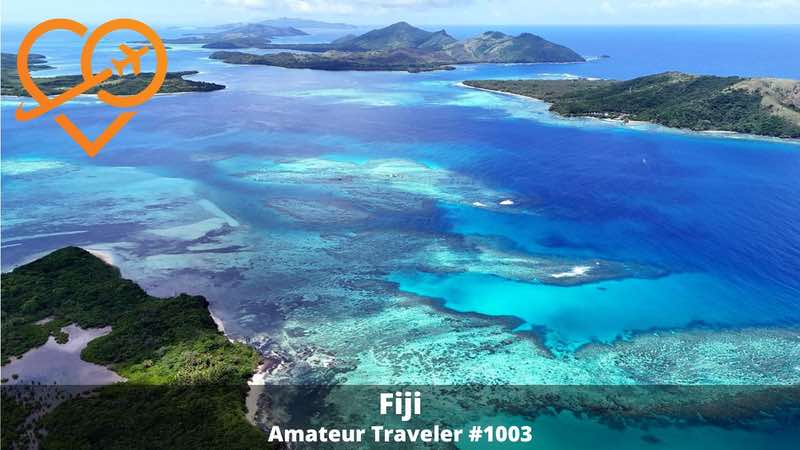
Hear about travel to Fiji as the Amateur Traveler talks to Jonty Crane from jontytravels.com about this island nation where he lived this year.
Why should you visit Fiji?
Jonty says, “Fiji offers the classic South Pacific island experience, with excellent snorkeling and diving, attractive beaches, and welcoming people. It also has a well-established tourism industry, which accounts for approximately 40% of the economy. Fiji attracts around one million visitors each year, representing about 60% of all tourism in the South Pacific.”
Jonty’s Experience in Fiji
Jonty spent six months living in Suva, Fiji’s capital, and took four longer trips to different parts of the country.
In this episode, Jonty describes four trips of two to five days each. They can be combined into a longer island-hopping itinerary, as many visitors do.
Fiji is also a popular stopover for travelers taking longer trips to Australia or New Zealand. It is an especially popular vacation destination for Australians and New Zealanders.
Geography
Fiji is an archipelago of more than 330 islands, about one-third of which are inhabited.
It is approximately:
- Three hours by air north of New Zealand
- Four hours by air east of Australia, roughly aligned with Cairns
- Eleven to twelve hours west of the US West Coast
A Brief History of Fiji
The islands were first settled around 3,000 years ago.
Europeans arrived in greater numbers during the 19th century, and Fiji became a British colony in 1874. The British brought indentured laborers from India to work on sugar plantations. Today, Indo-Fijians make up approximately 37% of the population.
Fiji gained independence in 1970. The country experienced political instability and several military coups between 1987 and 2006, but today it is a stable democracy.
Yasawa Islands
Recommended time: 3–5 days
The Yasawa Islands are a collection of approximately 20 volcanic islands northwest of Nadi. Depending on the destination, the journey takes between two and five hours aboard the Yasawa Flyer or a resort boat.
Until 1987, the Fijian government prohibited land-based tourism in the Yasawa Group. The traditional ruler of the islands opposed tourism and was largely outside the government’s control.
Blue Lagoon Beach Resort
Jonty stayed at Blue Lagoon Beach Resort, a good example of a Fijian island resort. Accommodations include garden villas, beach villas, and newer yurts.
The resort has:
- Two swimming pools
- Two restaurants
- A Japanese restaurant offering a ten-course dinner
- A good reef just offshore for snorkeling
- Guided snorkeling and diving excursions
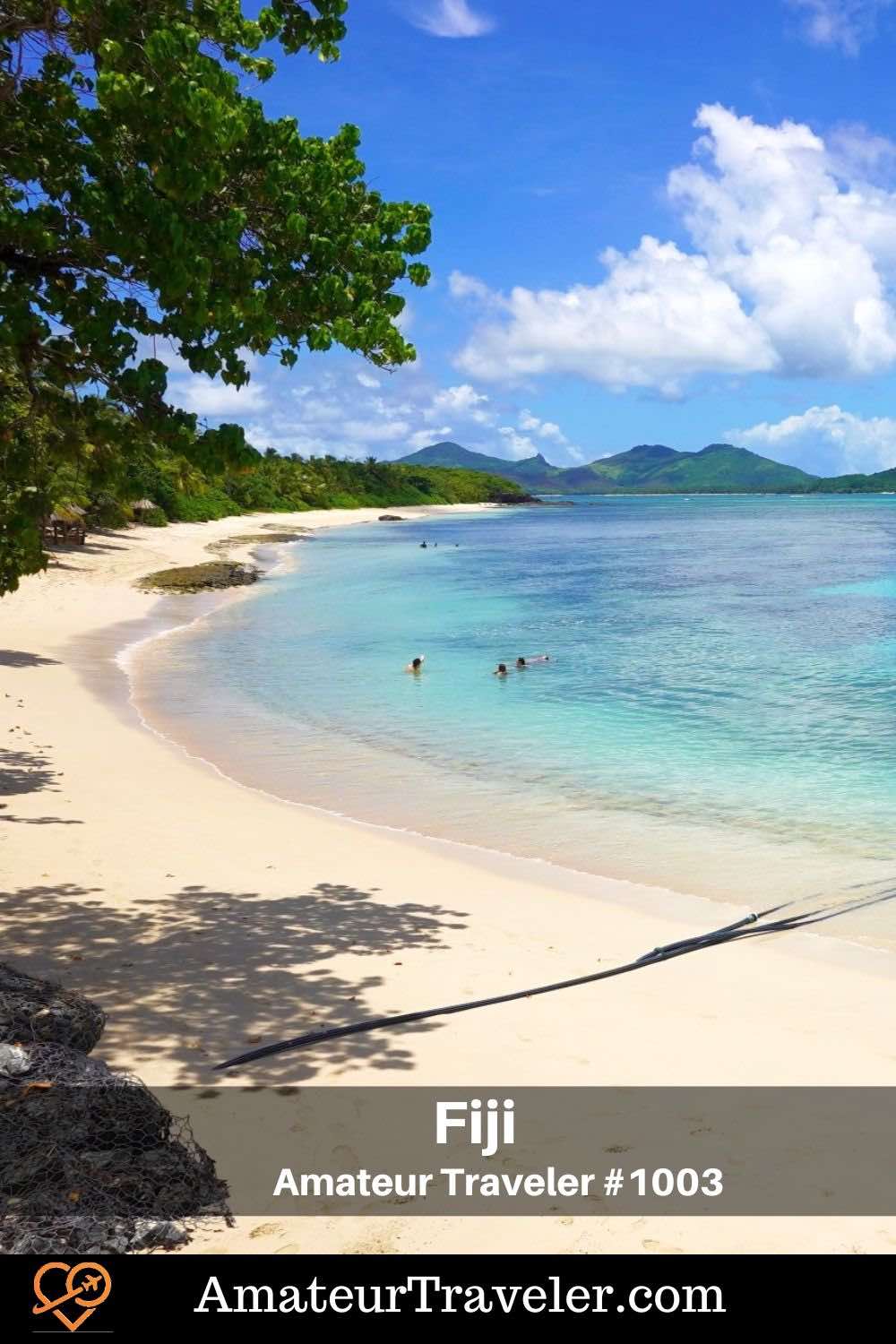
The snorkeling directly from the beach includes plenty of fish, although the reefs reached by boat are better. A guided trip to two snorkeling sites costs approximately $55.
Similar sister properties include Octopus Resort and Paradise Cove Resort.
Hiking on Nacula Island
Jonty hiked to the highest point on Nacula Island. The hike takes a couple of hours and passes through a lush volcanic landscape, especially during the wet season.
The trail is easy to follow but can be steep and slippery. Hiking poles are worth bringing.
Sawa-i-Lau Caves
The Sawa-i-Lau Caves are one of the region’s most memorable attractions. Visitors swim inside the first cave and then pass beneath a small underwater opening to enter a second cavern.
Accommodations in Fiji
Fiji is primarily a resort destination. Unlike Samoa, it does not have many traditional fale-style accommodations.
Airbnbs are available but are not especially common. Some resorts offer hostel-style dormitory rooms.
Most resorts are located beside the water. The largest concentrations are found:
- Near Nadi
- Along the Coral Coast of Viti Levu
- In the Mamanuca Islands
- In the Yasawa Islands
- On Taveuni
- Along the southern coast of Vanua Levu
Resorts commonly offer village tours, church visits, massages, snorkeling, and diving, although the available activities vary by property.
Approximately two-thirds of Fiji’s tourism properties are locally owned, with many owned by the Fijian pension fund.
Taveuni Island
Recommended time: 3–5 days
Taveuni is Fiji’s third-largest island. It is known as the Garden Island because of its lush vegetation, although that greenery comes with frequent rain.
Rainbow Reef
Rainbow Reef lies between Taveuni and Vanua Levu, Fiji’s second-largest island. It is often described as the “soft coral capital of the world.”
A half-day trip costs approximately:
- $35 for two snorkeling sessions
- $100 for two dives
The reef is in open water, so participants should be confident swimmers.
Honeymoon Island
Jonty personally enjoyed snorkeling near Honeymoon Island even more than Rainbow Reef. The water is shallower, and the snorkeling area is much closer to shore.
Visitors can hire a local boatman or kayak to the island relatively easily.
Lavena Coastal Walk
The Lavena Coastal Walk is widely regarded as one of the best hikes in Fiji.
The approximately 10-kilometer, or 6.2-mile, out-and-back trail takes three to five hours. It is a relatively easy coastal walk ending at Wainibau Falls.
Admission is approximately $35.
Waitavala Waterslide
Taveuni’s natural waterslide is exciting enough to be fun without feeling excessively dangerous. Visitors should go with a local who understands the conditions and the safest route.
International Date Line
The International Date Line passes near Taveuni. The marker is a quick and entertaining photo stop.
Getting Around Taveuni
Jonty recommends renting a car for one or two days to explore the island’s land-based attractions.
Water activities are best arranged through a visitor’s accommodation. Most accommodations are located near the airport at the northern end of the island.
Flights from Nadi or Suva are the easiest way to reach Taveuni.
Ovalau and Moturiki Islands
Recommended time: 2 days
Jonty visited Ovalau and Moturiki through Kauwai Retreat, traveling from Suva. This arrangement is easier with a larger group, although visitors can also fly from Nadi to Levuka.
He traveled by boat from the eastern coast of Viti Levu to the relaxing Kauwai Retreat on Ovalau Island.
Moturiki Island
Jonty took a half-day hike on Moturiki Island, home to some of Fiji’s earliest Lapita archaeological sites. Fiji’s oldest known human skeleton, dating back approximately 3,000 years, was found there.
The island has no cars or mains electricity.
After the hike, his group had lunch with about half the village. The experience included kava, food, and dancing.
Village Etiquette and Kava Protocol
Visitors should follow local customs when entering a Fijian village:
- Dress modestly, with shoulders and knees covered.
- Ask permission before entering a village, ideally through a guide or host.
- Remove hats and sunglasses.
- Follow the local kava ceremony protocol.
When receiving kava:
- Clap once.
- Say “Bula.”
- Drink the kava in one go.
- Clap three times afterward.
Kava looks and tastes somewhat like muddy water. Jonty limited himself to one serving.
Levuka
Levuka served as Fiji’s first colonial capital for eight years, beginning in 1874. It is Fiji’s only UNESCO World Heritage Site.
The town is somewhat run-down but atmospheric, with a scenic waterfront and numerous colonial-era buildings. There are few major individual attractions, but the historic streetscape is the main reason to visit.
Jonty’s trip concluded with some of the best snorkeling he has ever experienced, with vividly colored coral and large schools of fish.
Driving Around Viti Levu
Recommended time: 4–5 days
Suggested route: Nadi, Coral Coast, Suva, Rakiraki, and Lautoka
Viti Levu has the greatest number of conventional attractions, although it was Jonty’s least favorite of the four trips covered in this episode.
Nadi
Nadi is Fiji’s main tourism hub because of its international airport and boat connections to the Mamanuca and Yasawa Islands.
Nearby Denarau Island is a man-made resort area.
Major attractions include:
- Sri Siva Subramaniya Temple, the largest Hindu temple in the Pacific
- Garden of the Sleeping Giant
- Sabeto Hot Springs and Mud Pool
- Viseisei, a historic village said to be where the first Fijians arrived, although the experience is tourist-oriented
Coral Coast
The Coral Coast has numerous resorts and some reasonable snorkeling.
The Sigatoka Sand Dunes offer a four-kilometer, or 2.5-mile, walk through dunes ranging from 20 to 60 meters high.
Whitewater rafting is available in the Upper Navua Gorge.
Pacific Harbour
Pacific Harbour is approximately one hour east of Suva and is known as the Adventure Capital of Fiji.
Activities include:
- Beaches
- Resorts
- Whitewater rafting
- Jet skiing
- Excursions to Beqa Island
- Shark diving
Beqa was covered in another Amateur Traveler episode.
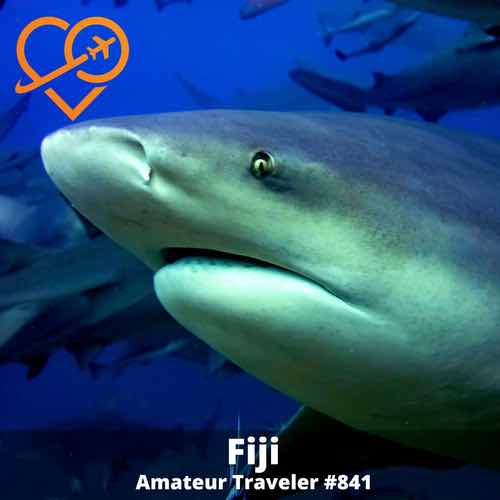
Several operators in Fiji offer shark-diving experiences. Some feed the sharks, guides have reportedly been bitten, and the experience can be physically and emotionally intense.
Suva
Suva has been Fiji’s capital since 1882. The greater urban area, including Lami, Nasinu, and Nausori, is home to approximately 330,000 people, more than one-third of Fiji’s population.
The city center is relaxed and walkable, with a number of colonial-era buildings.
Suva is not what most travelers imagine when they picture Fiji, but Jonty considers it a moderately interesting place to spend a day.
Religion in Suva
Suva is home to:
- Christian churches
- Hindu temples
- Mosques
- A Latter-day Saints temple
- A Sikh temple
- A Hare Krishna temple
Christianity is Fiji’s dominant religion, followed by Hinduism and Islam, reflecting the country’s cultural diversity.
Fiji also has one of the world’s largest Hare Krishna populations per capita.
Suva Municipal Market
Suva Municipal Market is worth exploring for its produce, local ingredients, and everyday city atmosphere.
Suva Seawall
The seawall walk is pleasant and especially popular around dawn and dusk.
Outdoor Attractions Near Suva
Approximately 20 minutes from the city are:
- Colo-i-Suva Forest Park: Bushwalking trails and swimming holes
- Mount Korobaba: Excellent views from the summit, although the trail is steep, slippery, and begins near a cement works
Fiji Museum and Historic Buildings
The Fiji Museum is worth visiting, and several heritage buildings can be found around the city center.
Parks and Wildlife
Thurston Gardens and Ratu Sukuna Park are small but pleasant green spaces with impressive tropical trees.
Thurston Gardens and the neighboring Government House grounds are home to giant fruit bats, which are most active around dusk.
Albert Park is a busy sports ground. Indigenous Fijians are passionate about rugby, while many Indo-Fijians enjoy cricket.
The park is overlooked by:
- The Parliament of the Republic of Fiji, housed in a complex built during the 1930s
- The Grand Pacific Hotel, commonly called the GPH, which opened in 1914
Suva Harbour
Suva Harbour contains a number of abandoned and shipwrecked boats. They can be particularly interesting to photograph with a drone.
Some people also kayak to the wrecks near Lami.
Reserve Bank of Fiji
The Reserve Bank, located near the Catholic cathedral, sells collectible currency, including a seven-dollar note celebrating Fiji’s success in rugby sevens.
Rakiraki
The drive from Suva to Rakiraki takes approximately three to four hours along the scenic Kings Road.
Possible stops include:
- St. Francis Xavier Church, also known as the Church of the Black Christ
- Volivoli, which offers good diving and snorkeling
Volivoli was the destination of Jonty’s first trip to Fiji.
Lautoka
The drive from Rakiraki to Lautoka takes approximately two hours.
Lautoka is Fiji’s second-largest city, with a population of around 80,000. Fiji’s western coast is considerably drier than the eastern side.
The city is a center of the sugarcane industry. Sugar was once a much larger part of Fiji’s economy than it is today.
There is not much to see in the city itself beyond:
- A small botanical garden
- A Hare Krishna temple
Food in Fiji
Fijian resorts generally serve a mixture of Western food and local dishes.
Common local ingredients include:
- Coconut
- Taro
- Cassava
- Fresh seafood
Two of Fiji’s best-known dishes are:
- Lovo: Meat, fish, and vegetables cooked underground in an earth oven
- Kokoda: Raw fish marinated in citrus juice and coconut cream
Many restaurants in Fijian towns serve fast food or Indian food. Jonty found that some of the country’s best dining was at resorts.
Getting to Fiji
Fiji is the best-connected island nation in the Pacific.
Nadi has direct flights to destinations including:
- New Zealand
- Australia
- Vancouver
- Tokyo
- Singapore
- Hong Kong
- Honolulu
- San Francisco
- Los Angeles
- Dallas–Fort Worth
Fiji Airways isn’t Jonty’s favorite airline. The crews are good, but he found the in-flight entertainment and food average, and the airline’s customer communication poor. Three of his six flights were delayed, including one delay of an entire day. Significant delays did not appear to be unusual.
Getting Around Fiji
Most visitors remain at their resort, which can usually arrange transportation from Nadi International Airport.
Driving around Fiji is relatively straightforward. Traffic is generally light, and the main roads are paved.
Cars are common, but motorcycles are much less prevalent than in many other parts of the world.
Ferries connect Fiji’s major islands, but domestic flights are generally the most practical way to travel longer distances. Most domestic flights operate from Nadi. Suva’s airport has more limited connections.
Safety
The vast majority of visitors experience no problems in Fiji, but travelers should exercise caution after dark in Nadi and Suva.
Alcohol-related behavior can occasionally be an issue, particularly around groups of young men.
Visitors are likely to spend considerable time on boats and in the water, so normal swimming, snorkeling, boating, and sun-safety precautions apply.
Languages
Fiji has three official languages:
- English
- Fijian
- Fiji Hindi
English is widely spoken in the areas most frequently visited by tourists.
Occasionally, visitors may need to phrase a question in several different ways to receive the information they are looking for.
Costs
Fiji is not an inexpensive destination.
At a resort, travelers should budget separately for:
- Accommodations
- Meal plans
- Transportation to and from the resort
- Snorkeling and diving
- Boat trips
- Excursions and other activities
Meal plans are often necessary because there may be few or no alternative places to eat near a resort.
Some high-end resorts charge thousands of dollars per night.
The South Pacific is not generally a budget destination. Jonty found Fiji substantially more expensive than Samoa, although the standard of accommodations and tourism infrastructure was often higher.
Fiji should not be considered a particularly cheap backpacking destination.
Internet and Mobile Service
The main mobile providers are Vodafone and Digicel.
Visitors can purchase an eSIM or a physical SIM card. A plan offering approximately 120 GB of data for one month costs around $35.
Coverage can be patchy outside the main settlements. Most resorts offer Wi-Fi.
Climate and the Best Time to Visit
Fiji has a tropical maritime climate. Conditions are warm and humid throughout the year.
Temperatures generally range from:
- 77°F to 89.6°F
- 25°C to 32°C
The wet season lasts from November through April. Rain is more frequent, humidity is higher, and tropical storms are more likely.
Prices during the wet season may be approximately 30% lower, and there are usually fewer visitors.
The dry season and shoulder seasons generally offer the most comfortable conditions.
Additional Fiji Travel Tips
- Resorts usually provide snorkeling equipment, but bringing a personal mask helps ensure a proper fit.
- Resorts generally accept credit cards.
- Credit cards have limited usefulness outside resorts and major towns.
- Travelers should carry cash when visiting areas outside the cities.
- ATMs are plentiful in cities but rare elsewhere.
- Nightlife is primarily concentrated in Nadi and Denarau.
- Fiji has fewer white-sand, postcard-style beaches than some visitors expect.
Sponsors

- Upgrade your wardrobe with high-quality essentials and get free shipping and 365-day returns at Quince.com/TRAVELER.

- Save 50% on Unlimited premium wireless plans starting at $15/month at MintMobile.com/traveler.
- For a limited time, try OneSkin with 15% off using code TRAVELER at oneskin.co/TRAVELER.
- Buy Travel Insurance
- Get a Car Rental

- Find the card that fits your lifestyle and apply today at joinbilt.com/traveler

subscribe: rss feed | Apple podcasts

right click here to download (mp3)
Show Notes
Jonty Travels
Volunteer Service Abroad
Pacific Tourism Organisation
Fiji
Viti Levu
Vanua Levu
Yasawa Islands
Blue Lagoon Beach Resort
Octopus Resort
Paradise Cove Resort
The Blue Lagoon (1980 film)
Sawa-i-Lau
Coral Coast
Mamanuca Islands
Taveuni
Rainbow Reef
Rainbow Reef tours
Lavena Coastal Walk
Waitavala Natural Rock Waterslide
International Date Line
Ovalau
Moturiki
Kauwai Retreat
Melanesia
Kava
Levuka Historical Port Town
Denarau Island
Nadi
Sri Siva Subramaniya Temple
Garden of the Sleeping Giant
Sabeto Hot Springs and Mud Pool
Viseisei Village
Sigatoka Sand Dunes
Pacific Harbour
Beqa Island
Suva
University of the South Pacific
Suva Municipal Market
Colo-i-Suva Forest Park
Mount Korobaba
Fiji Museum
Thurston Gardens
Government House, Suva
Albert Park (Suva)
Parliament of Fiji
Grand Pacific Hotel
Sacred Heart Cathedral, Suva
Kings Road
Church of the Black Christ
Rakiraki District
Volivoli Beach Resort
Lautoka
Fijian Kokoda – Fiji’s National Dish
Rotuma
Community
Give me your feedback on the show at AmateurTraveler.com/1000
Amateur Traveler Trips

 Travel to Fiji (Viti Levu and Taveuni) – Episode 841
 Travel to Fiji – Episode 445
 Travel to the Cook Islands – Episode 238
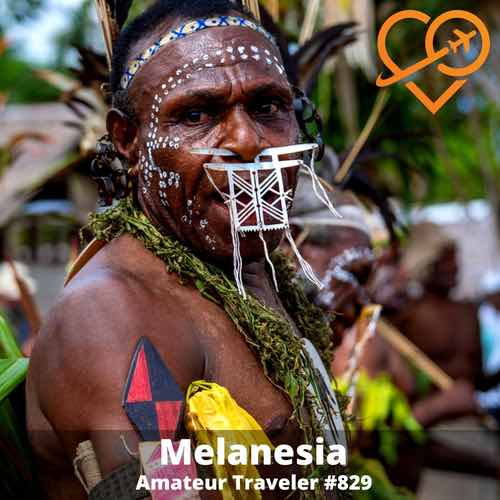 Cruise the Islands of Melanesia – Episode 829
by Chris Christensen
Chris Christensen is the creator of the Amateur Traveler blog and podcast. He has been a travel creator since 2005 and has won awards including being named the "Best Independent Travel Journalist" by Travel+Leisure Magazine.+Chris Christensen | @chris2x | facebook
Leave a Reply
Tags: audio travel podcast, fiji, podcast