Ventus Australis Cruise Ship Review: Your Home at the End of the World
categories: south america travel
I wrote elsewhere about the itinerary of exploring Patagonia in southern South America with Australis. This post looks at the ship that we called home for 8 nights, Australis’s Ventus. This was our base, our lecture hall, and a floating restaurant and hotel in a world of jagged peaks, narrow channels, and glaciers.
Also listen to Cruising Patagonia with Australis – Amateur Traveler Episode 974.
Table of contents: ()
- The Ship: Why Purpose-Built Matters
- Mobility
- Cabins: Practical and Surprisingly Peaceful
- Communication and Entertainment
- Public Spaces
- MultiLingual Programing
- Food: Comfort with a Patagonian Accent
- Life Onboard: Languages, Culture, and Connection
- The Crew: Unflappable Guides to the Wild
- Zodiac Landings: The Soul of the Journey
- Disembarkation
- Communications: Embrace Disconnection
- Practical Tips for Travelers
- Ventus vs Stella
- Who Should Sail This Ship
- Final Reflections

The Ship: Why Purpose-Built Matters
The Ventus Australis is not a large vessel. It was built in Chile specifically for these voyages. It holds around two hundred passengers. The scale matters. Patagonia’s channels are narrow, and some glacier bays require tight maneuvering. A megaship could not reach these places without disturbing them, if at all. Our landings were made in Zodiacs, so we left the ship in groups of around 12 passengers.
I have cruised these waters before on a larger ship (See Cruising South America with Holland America). I expected to feel the motion of the ocean more in a smaller boat than I did. The first evening, we sailed through whitecaps without much fuss. The hull shape and the stabilizers meant that we were only aware of the ship’s movement when it was sailing through waters open to the ocean, which it did, getting from the Straits of Magellan to the Beagle Channel, and when sailing to Cape Horn.
Sailing to Cape Horn, swells occasionally reminded us that Antarctica sat not so far away. The Ventus Australis handled that motion confidently. It is not a zero-movement vessel, but it is steady. Travelers with moderate sea sensitivity should bring medication, not because the ship is unstable, but because Patagonia is rarely calm.

Mobility
I cannot recommend this cruise for someone with limited mobility. This is an active cruise.
The Ventus Australis has five decks and no elevators. In addition, this cruise involves getting into and out of Zodiacs. Most of the excursions involve a walk or a hike. If a strenuous excursion is available, there is always a less strenuous option.

standard cabin
Cabins: Practical and Surprisingly Peaceful
Cabins on the Ventus Australis are not designed to impress through extravagance. They are built to support explorers. They include a wide and tall fixed window, two single beds with crisp linens, a shallow desk with a drawer, a nightstand, a chair, a stool, two small closets, and a compact bathroom.
The absence of a balcony made sense. Patagonia weather does not encourage lounging outdoors in a robe. A panoramic window lets you admire glaciers while wrapped in warm socks and a sweater.

premier cabin
There were a couple of cabins that looked to be wider by about 3-4 feet, but we had a standard cabin.
We travel fairly light, each of us carrying only a carry-on suitcase and a backpack. For us, there was more than enough storage to empty our suitcases and hide them under the bed. Hooks in the bathroom held clothes that needed to dry, although most of our zodiac landings were dry landings.

The bathroom offered decent water pressure, quick hot water, and a heated towel rack that was useful for drying some things we washed out.
In our cabins, we found a water bottle that we could refill at the filtered water stations on each deck, and a dry bag to keep our cameras and other gear dry when we got to shore. Both were ours to keep. The filtered water stations reinforce the ship’s sustainability ethos and save travelers from plastic bottles. The water in the sink in the bathroom is not filtered and therefore not drinking water.

The power plugs in the cabin use the international outlet that will take a European Type C plug or a grounded Type F plug. Your standard U.S. plugs will not work. You will need a plug adapter, as you would need for Europe, or a universal plug adapter.
You will also need to make sure anything you plug in can handle 220V. Most modern electronics will, but check on the plug, in very small print, to see if it says something like 100-240V. If you plug in something that cannot handle the higher voltage, it will destroy the device. If you want to plug in such a device, you will need a travel voltage converter.
There is a low-voltage plug in the bathroom.
- Buy Travel Insurance
- Book discount cruises HERE
- Get a Car Rental
- Get an eSim to be able to use your smartphone abroad.
- Get a universal plug adapter

Communication and Entertainment
There is public Wi-Fi, but there is no internet connectivity. There is an intranet with information about the ship and the itinerary. The itinerary in the intranet is the planned itinerary, which may change because of weather conditions. There are also live maps with the ship’s location in the ship’s lounges.
The lounges have large screens with the current daily schedule in different languages. The languages may depend on the guests on board. We saw English, Spanish, French, Portuguese, Italian, and German.

You can’t doomscroll on the internet on this cruise. You will have a cell signal only in or near the two ports of Punta Arenas and Ushuaia. Conversations in the lounges replaced scrolling through news feeds. People compared wildlife photos and life stories. If you can’t imagine getting your entertainment from interaction, then you will need to bring your own entertainment on your devices or a book. There are no cabarets, art auctions, or casinos on an expedition-class ship like the Ventus. The “fitness center” is an actual hike to a glacier lookout.

The guides of the staff will do presentations not just about the next day’s activities but also about the history of the area, the native people who inhabited the “land of fire”, Tierra del Fuego, explorers, and the science of glaciation. Expect a documentary about the explorer Shackleton rather than Hollywood movies or reality TV.
For example, on our voyage from Punta Areanas to Ushuaia, a guide named Agustín described how the glaciers advance and retreat over centuries. The whole landscape that you see in Tierra del Fuego is formed by glaciers, as this entire area was under ice during the last ice age, and there are still 600 glaciers in the Darwin Mountain Range.
Public Spaces

Darwin Lounge
The Darwin Lounge in the bow of the ship on the top deck (Deck 5) serves as the ship’s largest gathering space. Floor-to-ceiling windows face the sea.

The bar in its center is an open bar open from 10 am to midnight except for mealtimes. Drinks are included with the price of the cruise. You can request a pisco sour, a glass of regional wine, a whiskey, or a simple beer. The bartenders do not perform theatrics; they operate efficiently.

The Darwin Lounge also has a self-service cooler for beer and soda, a water dispenser, and a coffee machine. In the evening, at the presentation, before dinner, light snacks are also available.

Gift Shop
Just off the Darwin Lounge is the gift shop, which is open at set times throughout the day. The gift shop is also a place to purchase useful items. Hats, gloves, parkas, postcards, wool caps, enamel mugs, and local handicrafts fill its shelves. You can pick up the scarf you should have brought or that adorable stuffed penguin you need to take home. You can pay your crew tips at the gift shop with a credit card there as well; $25 per person per night is recommended.

Sky Lounge
The Sky Lounge is the second-largest lounge. It can be found aft (in the back of the boat) on Deck 4. The Sky Lounge offers coffee drinks, tea, and hot chocolate from before breakfast, and a selection of pastries, cookies, and small sandwiches available throughout the day until around 6 pm. The pastries in the Sky Lounge were great, but don’t expect the meals to leave you hungry.
Because it is in the stern of the boat, many excursions meet here and then wind down the outside staircases to Deck 1, where you will board or return on a zodiac.

Yamani Lounge
The Yamani Lounge in the bow on Deck 3 is the smallest and quietest lounge. It does not offer a bar or coffee, so it is a quiet place to read the book you brought.

Reception
You board and disembark the ship at ports through the reception area on the 2nd floor. This is also where you will contact the crew if you need a new key for your room or if you have some other request. There is a screen with the schedule in the reception area.

The area also has a small library of books on Patagonia in various languages that you can borrow during the cruise.

Patagonia Dining Room
All meals are served in the large Patagonia Dining Room on the 1st deck. Passengers are assigned a table with people who speak a language in common. Breakfast is served from a buffet. Lunch and dinner are ordered from a menu, usually at the meal prior.

Hallways
The hallways are pretty simple, plain. They have signs for whatever public spaces are on the particular deck. They have handrails just in case the ship is in rougher waters.

They are also where you will find a filtered water machine. You can get either hot or cold water from the machine.

Outside Viewing Areas
Outside viewing areas are available on the bow outside the Darwin Lounge, aft behind the Darwin Lounge, and on an observation deck above the lounge. There is also a small outside viewing area aft behind the Sky Lounge.
MultiLingual Programing
Because the program on the Ventus is offered in multiple languages, the guides will split up the group by languages for many of the presentations. On our cruise, the English and German speakers were in the Darwin Lounge getting a presentation in English with German subtitles, the Spanish speakers were in the Sky Lounge, and the French speakers were in the Yamani Lounge.
Announcements on the ship’s PA system are presented in different languages. On my cruise, announcements were always in English and Spanish, and sometimes in French. Guests who speak that language will be told where to gather for various events.
Expeditions from the ship are also done in different languages, so the German speakers, for instance, will tend to be in one group while the English speakers are in another.


Food: Comfort with a Patagonian Accent
Meals are served in a single large dining room. You will be assigned a table with your group or with fellow travelers who share a common language. We sat at a table of 6 on our journey to Ushuaia with some wonderful Brits and Aussies. We were given our own table on the way back to Punto Arenas, as most of the English speakers were traveling with their own tour group. People who laughed together in the Zodiacs trade penguin photos at dinner.

Breakfast is buffet style. Fruits, yogurt, cereals, fresh fruit, juice, eggs, sausages, pastries, coffee, and tea appear every morning. There are two buffets, one on each side of the boat.

There is a menu for lunch and dinner with 3 items (one meat, one fish, and one vegetarian). Three salads are always available: Caesar (optionally with chicken or salmon), the signature Australis salad (with walnuts, goat cheese, and apple), and a garden salad (with optional tofu or a hard-boiled egg). The seafood was particularly popular. Patagonia has access to pristine fisheries, and the kitchen honors that.
We often chose to skip a course or two so we wouldn’t gain too much weight during the full 8-night cruise. We also enjoyed the different salads.
My favorite dish may have been the pork tenderloins with cranberry dressing. We were traveling over the Thanksgiving holiday, and this was as close as I got to the traditional meal.
Bread is always available at lunch and dinner with butter, olive oil, and balsamic vinegar on the table. Salt, pepper, and Tabasco sauce are also on the table.


Desserts lean European: a berry mouse, citrus tarts, and profiterole made an appearance. If you possess even mild discipline, abandon it early. A fruit plate is always available as a dessert option.
Lunch and dinner are available with a red or white Chilean wine. There served such wines as a Carmenere (a new favorite), Sauvignon Blanc, Chardonnay, Pinot Noir, and Malbec. Soda is also available, as well as coffee and tea.
Dietary preferences are handled professionally. Announce allergies or needs early, and the staff will adjust. They are accustomed to catering to different cultures. Coffee, tea, beer, soda, hot chocolate, and filtered water remain available throughout the day in the lounges as listed above.
The menu from Punta Arenas to Ushuaia will be the same as the menu from Ushuaia to Punta Arenas for passengers who sail the 8-day trip. So make note of your favorites so you can order them again.

Life Onboard: Languages, Culture, and Connection
The Ventus Australis attracts an international crowd. You will tend to interact more with people who speak the same language as you, as you will be doing excursions and presentations together. But that might include a traveler from China or Moscow, as it did for us.
Most of the people on the cruise that we talked to were doing this as part of a longer itinerary in South America. A good conversation starter was “Where are you off to after this?” We talked to people who were doing trips of more than a month long, hitting many of the famous sites in South America.

The Crew: Unflappable Guides to the Wild
The crew is the backbone of the experience. Zodiac drivers understand swells instinctively. Guides position themselves like climbing partners while you board or disembark the craft.
Evening briefings outline the next day’s operations. Weather dictates everything. If the winds blow hard, the schedule shifts. If wildlife appears, the crew seizes the moment. Our trip to Cape Horn was moved from morning to evening due to the weather. If we had stuck with the original schedule, a landing would not have been possible.
For tipping, the company suggested $25 per person per day. If you can tip generously, do so. The crew works tirelessly but somehow always seems to be in a good mood. They handle gear, teach safety, guide excursions, drive Zodiacs, clean bathrooms, serve meals, keep the ship running, and serve drinks, all with good humor and professionalism.

Zodiac Landings: The Soul of the Journey
The moments off the ship define the Ventus Australis experience. On landings, boots, gloves, hats, and waterproof layers become your uniform. Each zodiac group launches from a platform at the stern. The choreography is precise. Two or three crew members assist with boarding. A third crew member pilots the craft.
At Cape Horn, weather prevented a safe landing on our trip from Punto Arenas to Ushuaia, but relented on the return journey. As we disembarked from our zodiacs, we were aware that landing was a gift on this island, where the next landmass south is Antarctica.
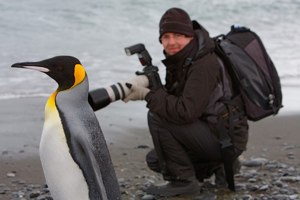
At Tuckers Islets, penguins waddled along rocky beaches or dipped into the water while we watched from our zodiacs nearby.

Disembarkation
Returning to Ushuaia was bittersweet. Bags were left outside cabins and reappeared onshore. Breakfast offered final conversations.
As I walked down the gangway, I looked back at the ship. The Ventus Australis had carried me past places where maps look uncertain. It had held steady against wind and tide. I did not feel like I was leaving a hotel. I felt like I was saying goodbye to a temporary base camp.
Communications: Embrace Disconnection
Prepare for very limited connectivity. Do not expect Wi-Fi. Do not expect cellular connectivity. Download maps, podcasts, camera software updates, and reading material before departure. Leave online obligations behind.
Tell family ahead of time that you will be unreachable. This simple step relieves pressure. You won’t be able to spend time on Instagram or doomscrolling the news.
You may find that the lack of connectivity fosters more human connection. You will have conversations with strangers about their travels while comparing glacier photos and sharing travel anecdotes.

The Stella Australis
Practical Tips for Travelers
- Pack layers that allow quick changes. Patagonia’s weather shifts rapidly.
- Bring a waterproof shell, gloves, a hat, and at least one insulating layer.
- Use the filtered water stations and carry your bottle everywhere.
- Attend every briefing.
- Break in footwear before the trip, preferably waterproof hiking boots.
- Bring binoculars. Wildlife sightings often happen at a distance.
- Ask the guides questions. They love sharing local knowledge.
- Budget for the onboard shop. Those penguins are adorable, and one came home with us.
- Treat crew tips as part of expedition ethics. Their effort deserves recognition.

Ventus vs Stella
The Stella is the other ship owned by Australis. The Ventus was launched in 2017. The Stella was launched in 2010. The layouts are the same, although I am told the decode is a bit more traditional on the Stella. The Stella has square windows in its Patagonia dining room, while the Ventus has a porthole. In theory, that means the Ventus could sail across the Southern Sea while the Stella would not be allowed to.
The routes for each ship are the same, offset by 4 days. They meet once every 4 days at Pia Glacier.

Who Should Sail This Ship
Choose the Ventus Australis if the idea of Patagonia fills you with curiosity. This voyage is not about Broadway-style entertainment or constant digital access. It is about glacier bays, wind-ripped oceans, penguin colonies, and evenings spent with other travelers who marvel at the same horizon.
You do not need technical outdoor skills. You need respect for nature and a willingness to follow guides who know these waters. If you measure travel by experiences rather than amenities, this ship will feel like home.
Avoid it if you demand internet or if the absence of nightlife feels like a loss. The Ventus Australis does not try to be everything. It focuses on what matters: bringing humans into contact with wild places responsibly.

Final Reflections
In the end, traveling on the Ventus Australis is not about ticking boxes on a sightseeing list. It is about standing on a shoreline that feels untouched and understanding that travel can still bring you to the edges of the world. It is about slowing down, breathing cold air, and letting the rhythm of nature dictate your itinerary. We loved this voyage and suspect you will as well.
My trip was hosted (paid for) by Australis, but the opinions expressed here are my own.

 Cruising Patagonia with Australis – Episode 974
 A Patagonia Expedition Cruise from Punta Arenas to Ushuaia and Back
 Cruise to the Falklands, South Georgia, and Antarctica – Episode 180
 Insider Tips for Choosing the Best Galapagos Cruise
by Chris Christensen
Chris Christensen is the creator of the Amateur Traveler blog and podcast. He has been a travel creator since 2005 and has won awards including being named the "Best Independent Travel Journalist" by Travel+Leisure Magazine.+Chris Christensen | @chris2x | facebook
Leave a Reply
Tags: chile, cruise travel, paragonia, patagonia